The Economics of Anonymity: How Underground Art Became Big Business
The art world has few paradoxes as weird as Banksy’s rise to commercial success. An artist whose identity stays completely hidden generates over $100 million in annual market value. Clandestine nighttime operations become blue-chip investment opportunities. This whole thing shows the tension between street art’s rebellious roots and its inevitable transformation into a commodity.
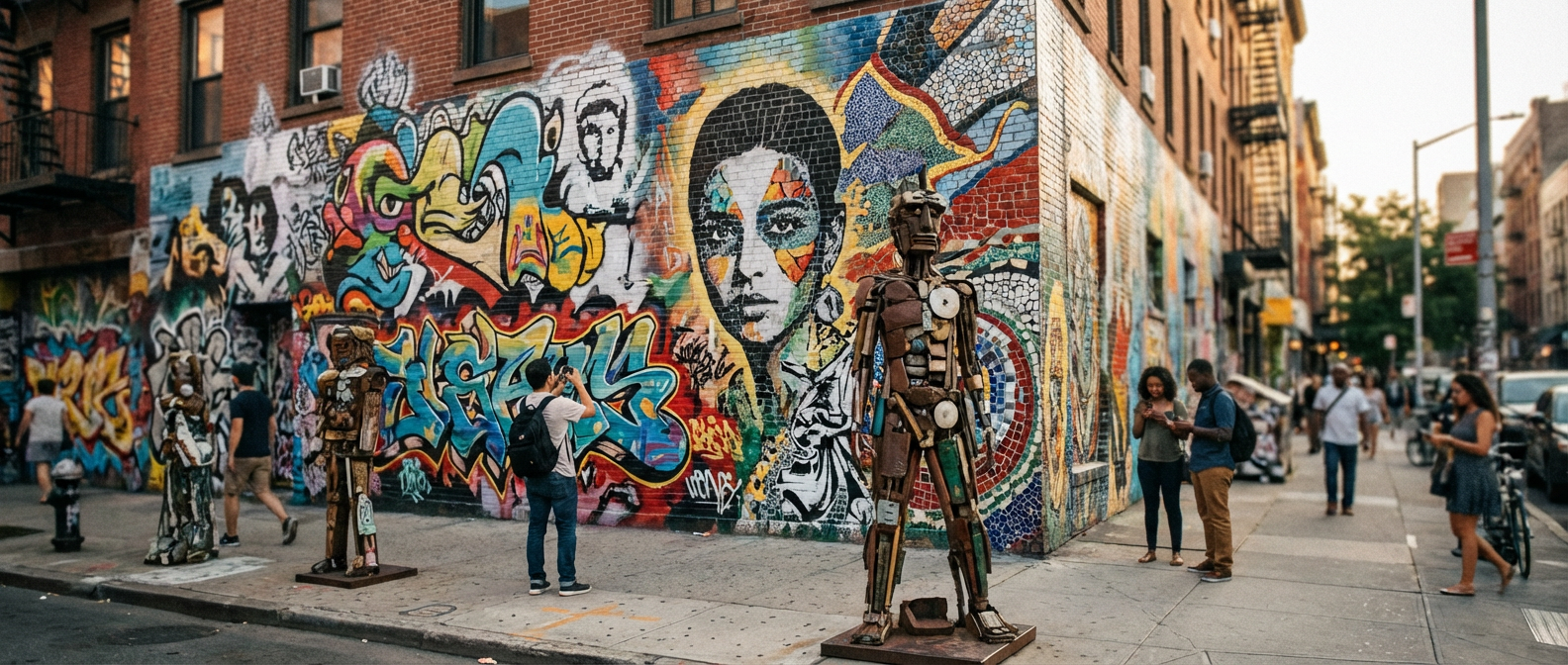
Traditional art markets depend on provenance, artist biographies, and institutional validation. Street art emerged from a culture of anonymity and anti-establishment attitude. Yet galleries now authenticate works ripped from walls. Collectors pay premium prices for pieces originally created as gifts to the public. The irony gets deeper when you realize many of these works explicitly critique the very economic systems that now profit from them.
This commercialization goes beyond individual artists to entire movements. What started as guerrilla interventions in urban spaces has created a legitimate industry with art fairs, specialized galleries, and academic programs. The Widewalls street art coverage documents how this transformation has created new categories of artistic practice, blurring the lines between vandalism and cultural production.

Urban Canvas: When Cities Commission Their Own Rebellion
Municipal governments now face a fascinating contradiction. They remove unauthorized graffiti while commissioning large-scale murals for urban regeneration projects. This selective embrace of street aesthetics shows how art’s role in economic development and community building is understood differently now. Cities replace traditional advertising hoardings with artist-created murals, essentially making official the very visual language that once challenged official authority.
Derelict neighborhoods get transformed through public art initiatives, but this shows how street art’s visual vocabulary has been co-opted for urban planning purposes. These officially sanctioned works often keep the bold colors, large scales, and accessible imagery of their unauthorized counterparts. But they do very different things. Rather than challenging power structures, commissioned murals frequently celebrate local history, promote civic pride, or attract tourism revenue.
This institutional adoption makes you question authenticity and artistic integrity. When city councils approve designs that must pass through committee reviews and public consultations, can the resulting works keep the spontaneity and edge that defined street art’s appeal? The sanitized rebellion of permitted murals suggests that something essential gets lost in translation from street to gallery wall.
The Tourist Gaze: Street Art as Cultural Currency
Street art tours now rank among the top five tourist activities in major cities according to TripAdvisor data. What were once hidden subcultures have become mainstream attractions. This popularity reflects a broader hunger for authentic urban experiences in an increasingly homogenized global world. Visitors seek out graffitied alleyways with the same enthusiasm once reserved for museums and monuments.
The commercialization of street art tourism creates its own feedback loops. Areas known for vibrant street art attract visitors, which attracts more artists, developers, and eventually higher rents. This cycle of cultural appreciation followed by economic displacement has become familiar in cities worldwide. The very authenticity that draws tourists often proves fragile, disappearing as neighborhoods gentrify and original communities get priced out.
Tour operators must navigate constantly changing canvases as new works appear and others get painted over or removed. This temporal instability, once a defining characteristic of street art, now creates logistical challenges for an industry built around reliable attractions. The ephemeral nature that gave street art its urgency becomes problematic when translated into tourist itineraries and guidebook entries.
Digital Extensions: When Physical Walls Meet Virtual Possibilities
Digital projection mapping has extended street art beyond static imagery into dynamic, interactive experiences. Artists now layer animated graphics onto building facades, creating temporary installations that respond to sound, movement, or time of day. This technological evolution suggests new possibilities for public art that transcends the limitations of paint and canvas while keeping street art’s fundamental accessibility.
These digital interventions exist in a space between physical and virtual reality. Unlike traditional graffiti, projection mapping leaves no permanent trace, yet it can transform entire cityscapes more dramatically than any painted mural. The technology lets artists work at unprecedented scales while avoiding legal complications associated with property damage, though it requires resources and technical expertise that may exclude many practitioners.
The integration of digital elements also opens new avenues for community engagement. Interactive projections can respond to pedestrian movement or social media activity, creating participatory experiences that involve passersby as collaborators rather than mere observers. However, this technological sophistication raises questions about whether such works keep meaningful connections to street art’s grassroots traditions or represent an entirely new artistic category.
Reclaiming Space: The Collective Response to Institutionalization
Artist collectives continue to reclaim abandoned spaces as temporary galleries, keeping street art’s tradition of unauthorized spatial appropriation alive even as the movement gains institutional recognition. These initiatives represent attempts to preserve the radical potential of public art while working within or around legal constraints. Empty buildings, vacant lots, and unused infrastructure become canvases for experimental work that might not find acceptance in traditional venues.
The temporary nature of these gallery spaces reflects both practical limitations and philosophical commitments to impermanence. Unlike established institutions with permanent collections and educational mandates, pop-up galleries in reclaimed spaces emphasize immediacy and community access. Artists can experiment with challenging content or unconventional formats without institutional oversight, preserving spaces for artistic risk-taking.
These collective efforts also work as training grounds for emerging artists who might otherwise lack access to exhibition opportunities. Street Art News regularly documents these temporary initiatives, highlighting how they keep connections between contemporary practice and street art’s collaborative roots. The challenge is sustaining such projects amid pressures of development, legal enforcement, and the ongoing need for new venues.
The evolution of street art from underground rebellion to mainstream cultural phenomenon reveals the complex dynamics between artistic expression and institutional power. As walls become galleries and galleries return to the streets, the boundaries between authorized and unauthorized art continue to shift, creating new possibilities for creative practice and community engagement.