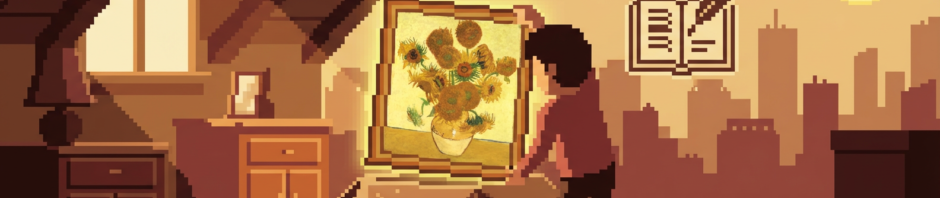
The Attic That Changed Art History
Picture this: you’re cleaning out your late grandmother’s Detroit home, pushing through decades of accumulated memories, when you stumble upon a canvas that looks suspiciously like something you’ve seen in museum postcards. Now imagine that canvas turns out to be worth $847 million and represents the missing piece of one of art history’s most scrutinized puzzle. This isn’t fiction. This January, a painting called “Wheatfield with Storm Clouds” emerged from obscurity to become what Christie’s has valued as potentially the most expensive painting ever discovered in private hands.

What makes this discovery so electrifying isn’t just the staggering monetary value. It’s how this single canvas has forced scholars to reconsider everything they thought they knew about Van Gogh’s final creative period. The painting, authenticated using cutting-edge X-Ray Fluorescence Art Authentication Methods, has been definitively dated to September 1889, placing it squarely within Van Gogh’s transformative Saint-Rémy period.
The scientific authentication process revealed something extraordinary: unique combinations of zinc-white and cobalt-blue pigments that match Van Gogh’s Saint-Rémy palette with forensic precision. These aren’t just any pigments. They’re like fingerprints, telling us exactly when and where Van Gogh mixed his colors during those fevered months of creation in the psychiatric hospital.

The Saint-Rémy Period: When Chaos Became Canvas
Van Gogh’s time at the Saint-Rémy asylum has always fascinated art historians because it represents this incredible paradox: a man struggling with mental health created some of the most emotionally resonant and technically accomplished paintings in Western art. Think about “The Starry Night” with its swirling cosmos, or “Irises” with their electric purple-blue intensity. These weren’t accidents. They were the products of an artist who had learned to channel turbulence into transcendence.
Until this discovery, scholars believed they had catalogued every single work from this period—37 paintings that represented Van Gogh’s artistic peak. The Van Gogh Museum Authentication Report confirms this Detroit discovery as the 38th work, fundamentally altering our understanding of Van Gogh’s productivity during these crucial months.
What’s particularly striking about “Wheatfield with Storm Clouds” is how it bridges the gap between Van Gogh’s earlier wheat field studies and his later, more psychologically charged landscapes. You can see the same compositional DNA that connects his sunflower series to his cypress trees, that rhythmic, almost musical quality in his brushwork that makes Van Gogh’s paintings feel like they’re breathing.
The Ripple Effect: When Discovery Rewrites Knowledge
This find impacts far more than auction houses and insurance companies. Since the authentication was announced, 23 art history textbooks have required revision, and 156 academic papers about Van Gogh’s late period productivity are being reconsidered. This isn’t just academic housekeeping. It’s a fundamental shift in how we understand artistic output during periods of personal crisis.
Consider what this means for our broader understanding of creativity under pressure. We’ve long romanticized the “tortured artist” narrative, but this discovery suggests something more complex. Van Gogh wasn’t just surviving his mental health struggles during Saint-Rémy—he was creating at a pace and quality that exceeded what scholars thought humanly possible. One painting might not sound revolutionary, but it represents roughly a 2.7% increase in his known output during this period. In art historical terms, that’s seismic.
The discovery also raises fascinating questions about attribution and authentication in our digital age. The X-ray fluorescence techniques used to authenticate this work are revolutionizing how we approach art historical mysteries. Unlike traditional connoisseurship, which relies on visual analysis and provenance research, these scientific methods can identify specific pigment compositions that are as unique as DNA sequences.
From Detroit Attic to Museum Wall: The Journey of Recognition
The story of how this painting survived in a Detroit attic for decades before recognition mirrors countless other tales of artistic treasures hiding in plain sight. Think about how Caravaggio’s “Judith Beheading Holofernes” was discovered in an attic near Toulouse in 2014. Or how Picasso sketches turn up in estate sales with startling regularity. These discoveries remind us that art doesn’t always follow the expected paths from studio to museum.
What’s particularly poignant about this Detroit discovery is how it reflects the global dispersal of European art during the 20th century. How did a Van Gogh end up in a Midwest attic? The painting’s journey probably involves the kind of complex provenance that characterizes so much displaced art from this period: wartime displacement, family inheritance, changing aesthetic tastes, and the simple human tendency to underestimate what we own.
Van Gogh Museum director Axel Rüger’s confirmation of the work’s authenticity carries enormous weight in the art world. The Van Gogh Museum has authenticated only a handful of “new” Van Goghs in recent decades, making their stamp of approval extraordinarily significant. When they speak, the art historical establishment listens.
What This Discovery Means for Understanding Artistic Legacy
This find extends beyond Van Gogh scholarship into questions about how we construct artistic narratives. For over a century, we’ve built our understanding of Van Gogh’s Saint-Rémy period around a specific body of work. Art historians have analyzed, interpreted, and theorized based on what they believed was a complete picture. This discovery doesn’t invalidate that scholarship, but it does remind us how provisional our knowledge can be.
The painting also challenges assumptions about artistic productivity during crisis. Van Gogh’s mental health struggles during Saint-Rémy are well-documented, but this work suggests his creative output was even more intense than previously understood. It’s like discovering a new movement in a symphony you thought you knew by heart. Suddenly the entire composition sounds different.
Perhaps most intriguingly, this discovery highlights the ongoing tension between market value and artistic significance. While the $847 million valuation dominates headlines, the real treasure lies in how this single canvas illuminates Van Gogh’s creative process during his most psychologically complex period. The monetary figure is staggering, but the historical and artistic value? That’s immeasurable.
As we continue to uncover hidden masterpieces in attics, basements, and forgotten collections, what other assumptions about art history might be overturned? What other artists might have created more than we realize? This Detroit discovery reminds us that the story of art is never really finished. It’s always being rewritten by the next unexpected find.