
The Obsessive Craft of Digital Preservation
Picture this: a team of digital archaeologists spending three years methodically scanning every surface, every brushstroke, every crack in the paint of the world’s most famous artworks. The Louvre’s digital twin project, which launched this past January, is the most ambitious art preservation effort in human history. Using 847,000 ultra-high resolution scans, this $89 million undertaking has created something unprecedented—a virtual museum that lets you examine the Mona Lisa’s sfumato technique at a resolution fifty times more detailed than standing directly in front of the painting.
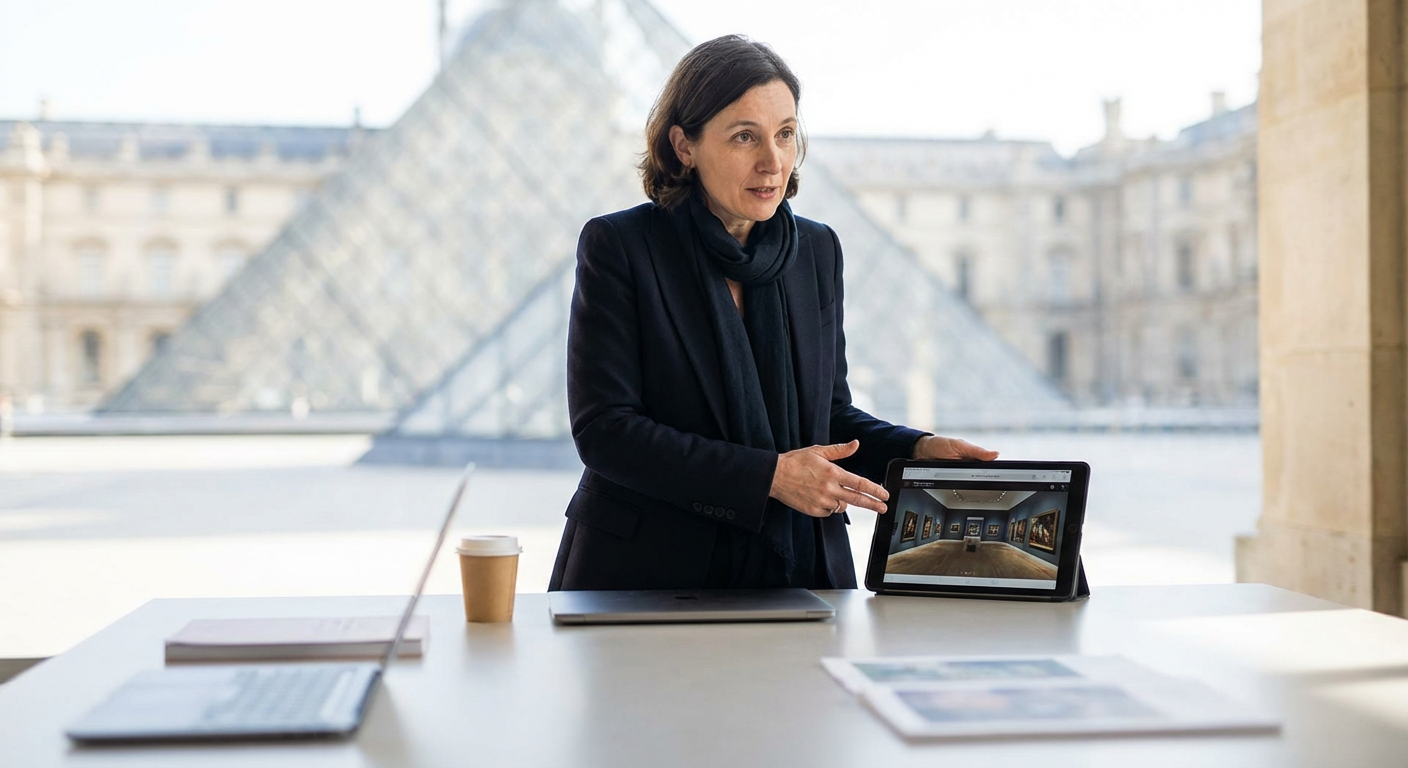
What fascinates me most isn’t just the scale, but the meticulous craft behind each scan. The team used specialized equipment that captures not only visual information but also the texture and dimensionality of paint layers. Think about Vermeer’s “The Lacemaker”—those tiny, precise dots of paint that create the illusion of delicate thread. In the digital twin, you can zoom in so close you can see how Vermeer built up the paint in microscopic ridges, creating texture that catches light differently from various angles. This level of detail was previously available only to conservators with magnifying equipment.
The technical achievement here mirrors what Renaissance masters did with their own revolutionary tools. Just as Jan van Eyck perfected oil painting techniques to achieve unprecedented realism, the Louvre’s digital artisans are pushing the boundaries of what’s possible in virtual preservation. The Louvre Digital Innovation Initiative is a new kind of craftsmanship—one that requires understanding both cutting-edge technology and centuries-old artistic techniques.
The Architecture of Virtual Space
Creating a digital twin isn’t just about scanning artworks—it’s about reconstructing the entire spatial experience of moving through the Louvre. The project team had to solve complex problems about how virtual visitors navigate the palace’s labyrinthine corridors, how lighting affects the viewing experience, and how to maintain the sense of scale that makes standing in the Great Gallery so overwhelming.
The platform, built on NVIDIA Omniverse Cultural Heritage Partnership technology, handles real-time rendering of millions of polygons while maintaining the subtle atmospheric effects that make art viewing so compelling. Consider how natural light filtering through the Louvre’s windows changes throughout the day, affecting how colors appear in paintings. The digital environment replicates these lighting conditions, allowing virtual visitors to see how Delacroix’s “Liberty Leading the People” looks in morning light versus the golden hour.
What strikes me as particularly clever is how the designers addressed the problem of virtual fatigue. In physical museums, we naturally pause, sit on benches, or step back to view paintings from different distances. The digital twin incorporates these rhythms through carefully designed interface elements that encourage similar viewing patterns. The result feels less like clicking through a slideshow and more like actually walking through galleries.
The Unexpected Democracy of Intimate Viewing
Within three months of launch, 2.3 million people have explored the virtual Louvre, with two-thirds spending more than 45 minutes inside—longer than most physical visitors stay. These numbers tell a story about access that goes beyond simple convenience. The digital twin removes barriers that have historically separated people from art: geographic distance, physical limitations, crowd control, and the glass cases that keep us at arm’s length from many masterpieces.
I’m particularly drawn to how this technology democratizes the kind of intimate viewing experience usually reserved for scholars and conservators. In the physical museum, you can’t lean in close enough to see how Leonardo built up the shadows in “Saint John the Baptist” without setting off alarms. In the digital space, you can examine every square millimeter of the painting’s surface, understanding how he layered translucent glazes to create that mysterious, ethereal quality.
The craft of looking—really looking—at art becomes possible for anyone with an internet connection. You can trace Ingres’ precise linework in “The Grande Odalisque,” seeing how he used tiny variations in pressure to create lines that seem to breathe. You can study how Géricault built the dramatic composition of “The Raft of the Medusa,” noticing details that would be impossible to see while jostling with other visitors in front of the massive canvas.
A New Economics of Cultural Experience
Director Laurence des Cars’ announcement that virtual ticket sales generated $4.6 million in the first quarter is more than just a new revenue stream—it signals a fundamental shift in how we value cultural experiences. The project has already been licensed to twelve major institutions, including the Metropolitan Museum of Art, which plans its own digital twin launch for fall 2026.
This isn’t simply about making money from digital reproductions. It’s about creating sustainable funding models for the incredibly expensive work of art conservation and museum operation. The revenue from virtual visits helps support the physical preservation of these artworks for future generations. In a sense, every virtual visitor becomes a patron, contributing to the maintenance and study of cultural heritage.
The ripple effects extend beyond economics. When museums like the Met adopt similar technologies, we’re witnessing the emergence of a new ecosystem where digital and physical experiences enhance each other rather than competing. Virtual visitors often become physical visitors, armed with deeper knowledge and specific artworks they want to see in person.
The Future Craft of Cultural Transmission
What excites me most about this project is how it’s expanding our definition of what authentic engagement with art actually means. The digital twin doesn’t replace the physical experience of standing before a masterpiece—it enhances and deepens it. We’re developing new literacy skills for reading art in virtual spaces, learning to appreciate the craft of digital preservation alongside traditional artistic techniques.
The technology also opens possibilities for new forms of artistic collaboration and education. Imagine art historians creating guided tours that highlight specific technical elements, or artists studying master techniques by examining brushwork at microscopic levels. The digital twin becomes not just a preservation tool but a new medium for art education and appreciation.
As more museums embrace this technology, we’re witnessing the birth of a global network of virtual cultural spaces. The craft knowledge embedded in these digital twins—from scanning techniques to interface design—is a new form of cultural expertise that bridges technology and art history. We’re just starting to understand how digital tools will reshape our relationship with artistic heritage, creating new ways to see, study, and preserve human creative achievement.