Why Everyone’s Suddenly Talking About One Museum Show
There’s this moment that happens in museums sometimes—you walk into a gallery and feel this immediate voltage in the air, like something important is happening whether you’re ready for it or not. The 2025 Whitney Biennial, which opened in March under curators Chrissie Iles and Meg Onli, is that moment. People aren’t just visiting it; they’re arguing about it. They’re writing heated think pieces. They’re calling their art-adjacent friends immediately after leaving. And the reason everyone can’t stop talking about it is because it refuses to let you coast through on comfortable viewing habits.
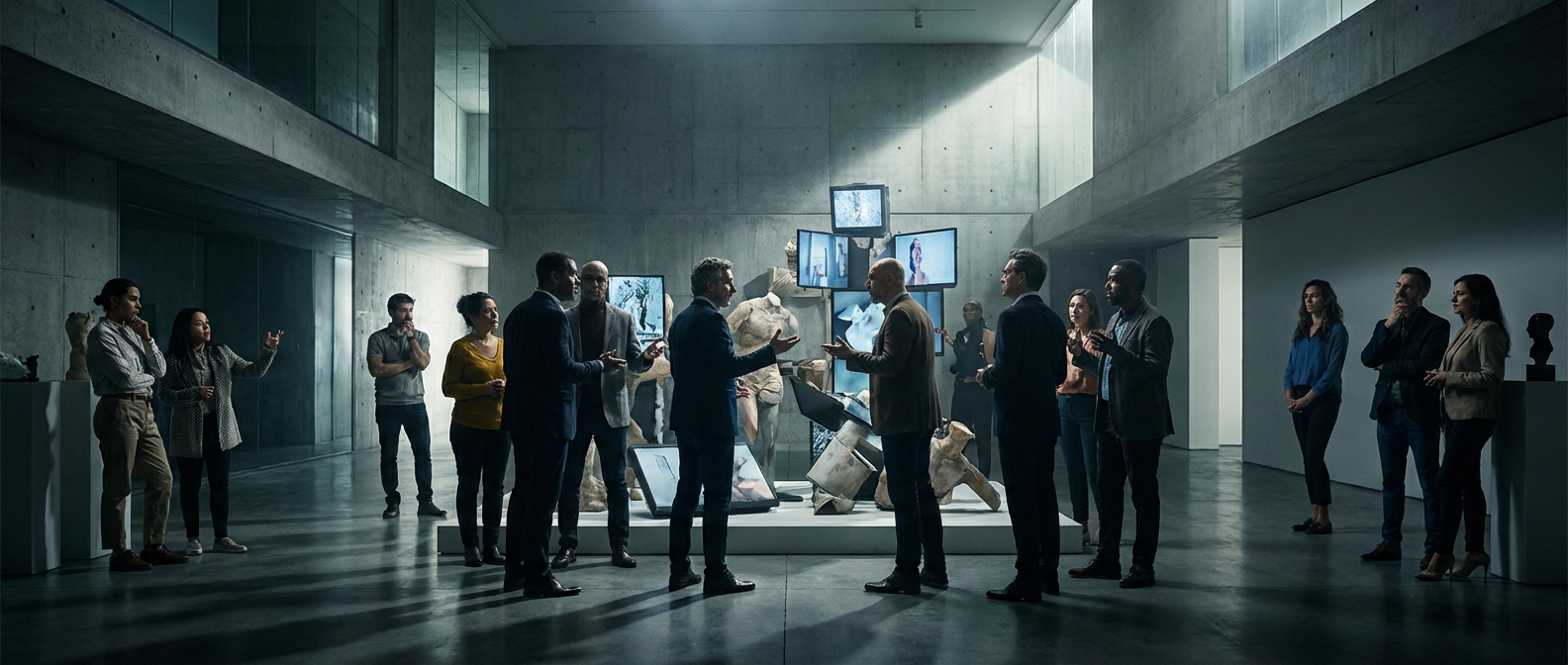
The Biennial has always been America’s unofficial temperature check for contemporary art. It happens every two years at the Whitney Museum in New York, and it’s been doing this since 1932, which means it’s been witnessing and documenting our cultural convulsions for nearly a century. But this year feels different. Critics are using words like “urgent to the point of exhaustion.” The advance ticket sales numbers are staggering—over 45,000 people snapped up tickets in the first three weeks alone, a 30% surge compared to the 2022 edition. Clearly, people sense something significant is unfolding.

The Numbers Tell a Story (If You Know How to Read Them)
Let’s start with the most obvious shift: representation. The 2025 Biennial features 71 artists and collectives, and approximately 78% of the participants are artists of color. That’s the highest percentage in the exhibition’s 93-year history. Now, before you think this is just a feel-good statistic to celebrate over coffee, understand what this actually means. It’s a structural recalibration. This isn’t tokenism or a diversity checkbox. This is the Biennial’s curatorial DNA rewriting itself. When you walk through these galleries, you’re not experiencing art as an addendum to a white-centered narrative. You’re experiencing art where different cultural traditions, perspectives, and ways of knowing are treated as the main text, not the footnotes.
But here’s where it gets complicated, and why people are divided. More than 60% of the works directly engage with urgent political and environmental themes—climate displacement, algorithmic surveillance, post-colonial land rights. This is serious, weighty material. There’s little room here for art that exists purely for aesthetic pleasure or formal experimentation. Every piece seems to be saying something urgent about our moment. And that’s either exactly what contemporary art should be doing, or it’s exactly what’s exhausting about contemporary art, depending on whom you ask. Artforum criticism and reviews have been split right down the middle on this question.
One Artist, One Installation, 10,000 Hand-Beaded Components
If you want to understand what makes this Biennial different at a granular level, spend time with Cannupa Hanska Luger’s large-scale installation. He’s showing a monumental work that includes over 10,000 hand-beaded components, all created through a collaborative process involving Indigenous communities across six different nations. The museum dedicated an entire 3,000-square-foot gallery to this single installation. Luger spent 14 months bringing this work into being. That’s not a timeframe you see very often in contemporary art exhibitions. That’s the kind of commitment that belongs to traditions of craft, community-based art-making, and ceremony.
What Luger’s work demonstrates, and what the curatorial team seems to understand, is that art can be a site of deep cultural knowledge, collaborative practice, and political resistance all at once. When you stand in that gallery surrounded by thousands of beaded forms, you’re not looking at an artwork that simply represents Indigenous experience from the outside. You’re inside a structure created through Indigenous methodologies and relationships. This is the difference between art that depicts marginalization and art that operates from the perspectives and frameworks of the communities creating it.
The Market Question Nobody Wants to Ask Out Loud
Now we arrive at the uncomfortable part, the part that makes art world people exchange knowing glances at gallery openings. The Biennial has become a launching pad for market success. Data from Art Basel’s Market Intelligence Report published in early 2025 examined the 2022 Biennial’s participants and found that 12 artists from that show saw their auction prices increase by 200% or more within 18 months of the exhibition closing. Two hundred percent. That’s not modest career development. That’s the art market suddenly deciding your work is valuable in ways it wasn’t before.
So here’s the tension: Is the Biennial functioning as art criticism, a curatorial argument about what matters in contemporary art? Or is it functioning as market speculation, a carefully constructed vehicle for asset appreciation? The answer is probably both, and the fact that it’s both is exactly why people are arguing about it so fiercely. When the same institutions that make reputations are also implicated in the market mechanisms that monetize those reputations, things get murky. You can look at the 2025 Biennial’s commitment to representing artists of color and emerging voices and feel genuinely hopeful. You can also look at the advance ticket numbers and the market appetite and wonder if what’s happening is revolution or co-optation wearing a progressive costume.
Why You Should Go and Form Your Own Opinion
The best response to a divisive exhibition is not to read about it—it’s to experience it. Visit the Whitney Biennial official exhibition page to get the details you need and make your way there. Spend time with the work. Notice what moves you and what frustrates you. Notice which galleries feel energized and which feel heavy. Notice whether you’re seeing formal innovations or whether you’re seeing artists using form to communicate urgent ideas. Notice whether both things can be true simultaneously.
The 2025 Biennial is divisive because it’s making choices. It’s taking positions. It’s saying that contemporary art in this moment should be accountable to something beyond itself—to communities, to ecological futures, to different ways of knowing and making. You might agree with that vision completely, or you might think the Biennial has abandoned aesthetic complexity for political clarity, or you might think that division between the two is a false one entirely. Whatever you think, go form that opinion in the presence of the actual work. That’s what museums are for.