The Whisper of Ancient Tools in Modern Studios
Walking through the ceramics wing at the Metropolitan Museum, I pause before a Tang dynasty horse, its cream glaze pooling in familiar ways around the muscular haunches. Across town in Brooklyn, potter Sarah Chen pulls a similar vessel from her kiln, the glaze settling into those same gravity-defying pools. The connection isn’t coincidental. Chen, like thousands of contemporary ceramicists, draws directly from techniques perfected over millennia, creating a living bridge between ancient workshops and today’s artist studios.
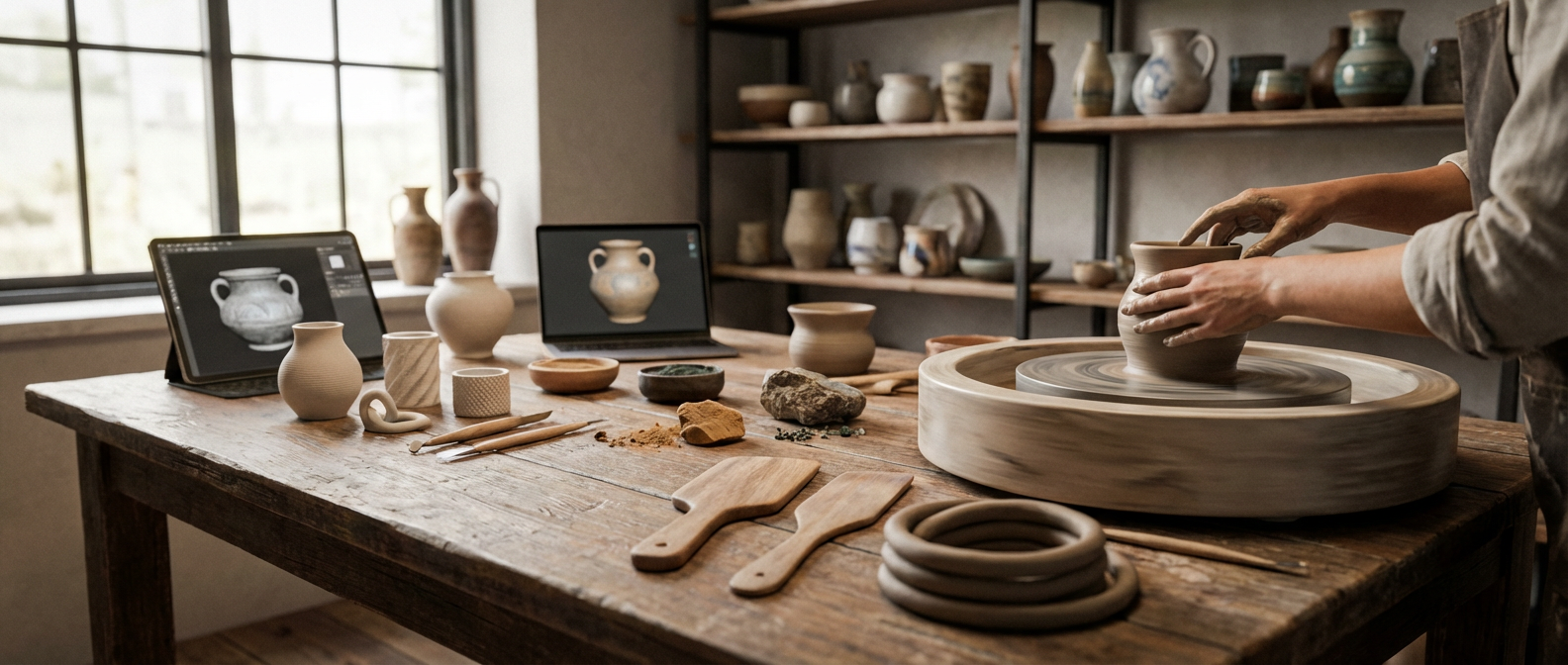
This isn’t mere homage or nostalgic recreation. Modern ceramicists are archaeological detectives, reverse-engineering glazes from pottery shards, studying firing patterns in ancient kilns, and adapting traditional hand-building methods to express thoroughly contemporary ideas. The result is a field where innovation springs directly from the deepest wells of human creativity, where understanding the past becomes the key to unlocking the future.
What strikes me most is how these ancient techniques solve problems that digital-age potters still face. The Japanese concept of wabi-sabi, born from 15th-century tea ceremony aesthetics, provides a framework for embracing the unpredictability that frustrates many beginning ceramicists. Korean moon jars from the Joseon dynasty offer lessons in achieving perfect asymmetry that contemporary artists like Ai Weiwei have adopted for large-scale installations.

The Alchemy of Ancient Glazes
Standing in ceramicist Mark Johnson’s Oakland studio, I watch him prepare a celadon glaze using a recipe that traces back to Song dynasty China. The subtle green-gray that emerges from his reduction kiln carries the same ethereal quality that made these glazes treasures worthy of imperial collections. Johnson spent three years studying historical firing techniques, learning to read the flame’s color and the kiln’s breathing patterns the way medieval potters did.
The technical precision required is staggering. Celadon’s signature color comes from iron oxide in a carefully controlled atmosphere where oxygen is systematically reduced. Too much oxygen and the glaze turns yellow-brown. Too little, and it becomes muddy gray. Chinese potters perfected this dance between fire and chemistry over centuries, knowledge that was closely guarded and passed down through generations of master craftsmen.
Modern ceramicists like Johnson don’t simply copy these formulas, they interpret them. His celadon vessels incorporate contemporary forms while honoring the glaze’s historical integrity. A recent series of large planters uses traditional celadon on angular, architectural shapes that wouldn’t look out of place in a modern home. The ancient technique becomes a vocabulary for speaking about today’s aesthetic concerns.
This revival extends beyond East Asian traditions. Pueblo pottery techniques from the American Southwest are experiencing a renaissance among contemporary artists. Maria Martinez’s blackware methods, refined in the early 20th century but rooted in ancestral Pueblo practices, inspire ceramicists worldwide who seek alternatives to industrial glazing. The smoke-fired surfaces and burnished terra sigillata finishes create depth that synthetic glazes struggle to match.
Hand-Building’s Timeless Logic
The pottery wheel gets most of the attention, but hand-building techniques tell ceramics’ deeper story. In her Harlem studio, artist Theaster Gates shapes vessels using coil-building methods that connect directly to African pottery traditions. Each coil is rolled by hand, joined to the next with fingers that understand clay’s plasticity in ways no machine can replicate. The resulting forms carry the maker’s presence in every curve and joint.
Gates’s work demonstrates how ancient techniques carry cultural memory. His vessels reference African pottery forms while addressing contemporary themes of urban decay and renewal. The hand-building process itself becomes part of the artwork’s meaning, connecting viewers to thousands of years of human creativity. When Gates fires these pieces using traditional methods, the unpredictability of flame and smoke creates surfaces that no industrial process could duplicate.
Coil-building techniques from different cultures offer distinct approaches to form and structure. Pueblo potters developed methods for creating large water vessels with walls thin enough to keep contents cool through evaporation. Japanese raku practitioners perfected rapid firing and cooling techniques that create dramatic crackling patterns. Contemporary artists combine these approaches, using Pueblo construction methods with raku firing or applying Japanese glazing techniques to African-inspired forms.
The Digital Kiln: Where Ancient Meets Algorithm
Technology transforms how contemporary ceramicists approach ancient techniques without replacing them. Digital pyrometers allow precise temperature control that helps artists replicate historical firing conditions more accurately than ever before. Computer modeling helps predict how glazes will flow and pool, reducing the waste that comes with experimental firing.
Artist Jennifer Rubell uses 3D printing to create complex ceramic forms that would be impossible to throw on a wheel, then finishes them with glazes based on 18th-century European formulas. The contrast between cutting-edge forming techniques and historical surface treatments creates work that belongs fully to neither past nor present. Her pieces suggest new possibilities for how ancient wisdom can inform contemporary practice.
Electric kilns with programmable controllers allow artists to recreate the specific firing curves that produce traditional glazes. Where ancient potters relied on experience to judge temperature by flame color, modern ceramicists can program precise heating and cooling schedules that replicate those hard-won insights. The technology helps tradition rather than replacing it.
Living Traditions in Tomorrow’s Clay
What excites me most about this intersection of ancient and contemporary is how it resists the art world’s frequent obsession with novelty. These ceramicists understand that innovation doesn’t require abandoning the past. Sometimes the most radical act is learning from it. When I see a young artist in an MFA program struggling with reduction firing techniques that Korean potters mastered centuries ago, I’m watching education in its purest form.
The future of ceramics lies not in choosing between ancient techniques and modern technology, but in understanding how they can inform each other. As environmental concerns push artists away from toxic industrial glazes, traditional plant-ash and natural mineral formulations offer sustainable alternatives with rich historical precedents. As global connectivity increases, techniques once isolated in specific regions become part of a shared vocabulary available to artists worldwide.
Next time you encounter a ceramic piece, pause to consider the hands that shaped it and the fires that transformed it. Feel for the weight of history in contemporary clay, the whisper of ancient wisdom in modern form. The potter’s wheel still turns as it has for millennia, but the conversation between past and present grows richer with each revolution.