When Colors Dance and Music Sings: The Secret Conversations Between Sound and Canvas

The Language Both Arts Already Speak

Walk into any gallery playing ambient music, and you’ll notice something magical happening. Your eyes might linger longer on a particular painting, or suddenly that abstract sculpture makes perfect sense. This isn’t coincidence. It’s the natural conversation that’s been happening between visual art and music for centuries, a dialogue so fundamental that we often experience it without realizing we’re witnessing something remarkable.

When Colors Dance and Music Sings: The Secret Conversations Between Sound and Canvas

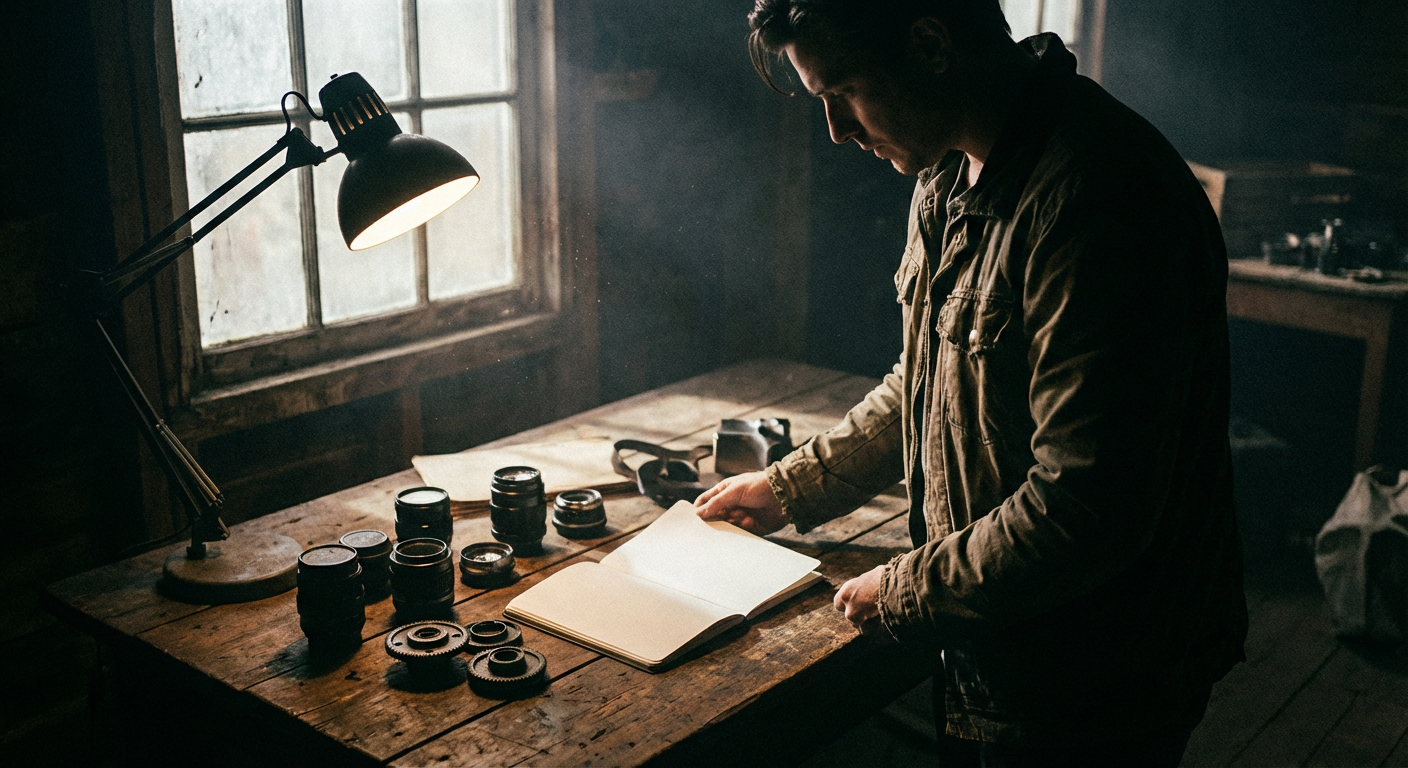
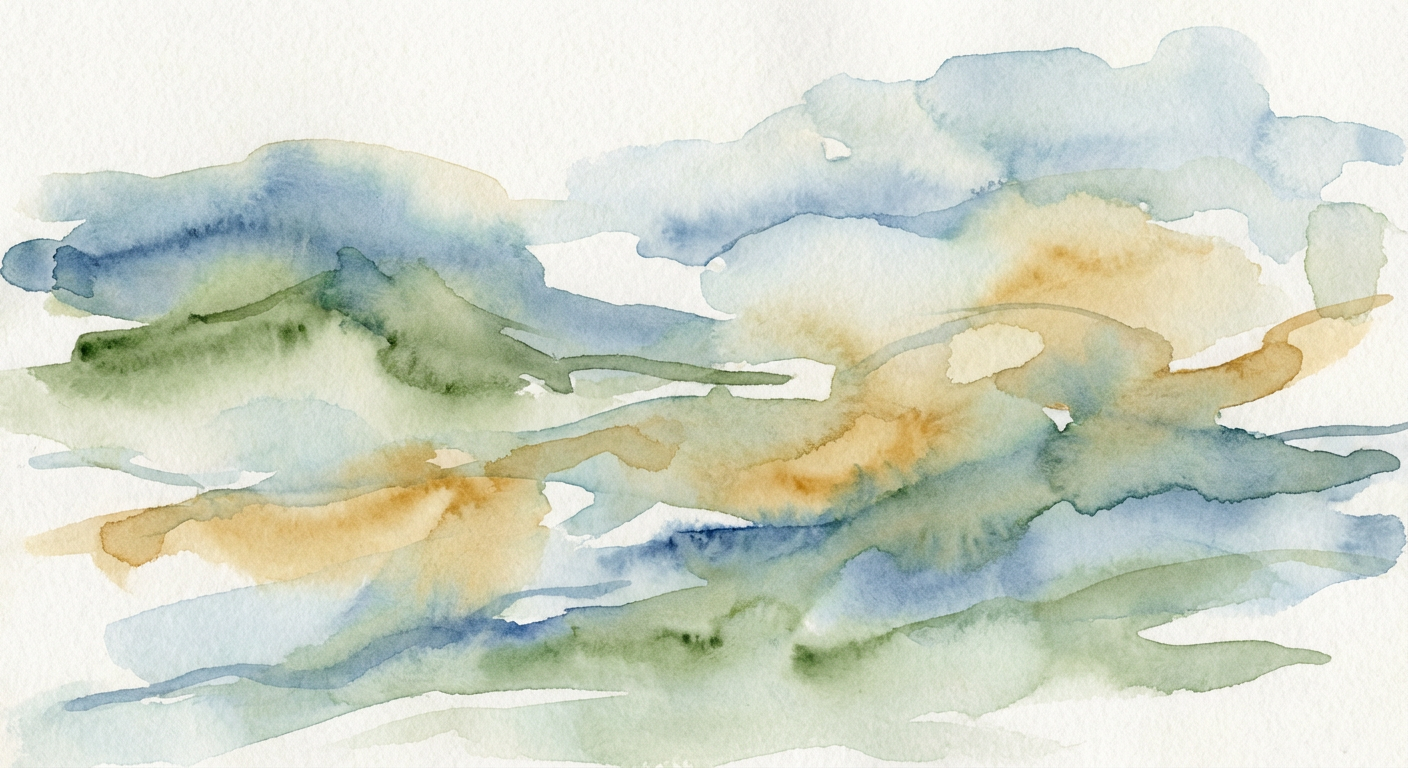
Both arts share an extraordinary vocabulary: rhythm, harmony, composition, and movement. When Kandinsky painted his explosive “Composition VII,” he wasn’t just throwing colors onto canvas. He was translating the musical structures he heard in his synesthetic mind into visual form. Those swirling blues and jagged reds follow the same principles that make a symphony emotionally compelling. The painting has crescendos in its bold strokes and quiet passages in its delicate details.

Think about how we describe both mediums. We talk about the “rhythm” of brushstrokes in a Van Gogh, the “harmony” of colors in a Monet, or the “tempo” of a Jackson Pollock drip painting. Music has “color,” “texture,” and “brightness.” These aren’t just poetic metaphors. They’re recognition of the deep structural similarities that make cross-pollination between these arts inevitable.

Illustration for When Colors Dance and Music Sings: The Secret Conversations Between Sound and Canvas

When Movements March Together

The most fascinating artistic periods happen when visual artists and musicians are responding to the same cultural earthquakes. Take the early 20th century, when everything was being broken apart and reassembled. Picasso and Braque were fragmenting faces into geometric planes while Stravinsky was doing the same thing to melody in “The Rite of Spring.” Both were rejecting the smooth, harmonious traditions of the 19th century in favor of something more angular, more honest about the modern world’s complexity.

Jazz and Abstract Expressionism emerged from the same post-war American energy. Miles Davis’s improvisation and Pollock’s action paintings both captured the spontaneous, confident spirit of a nation finding its artistic voice. You can hear the visual equivalent of a Pollock in a Charlie Parker saxophone solo. Both are about controlled chaos, about finding beauty in the unexpected collision of elements.

The counterculture movements of the 1960s show this parallel evolution too. Psychedelic rock didn’t just happen alongside psychedelic art. They were twins, feeding off the same desire to expand consciousness and challenge perception. The swirling, impossible colors of a Peter Halley painting and the layered, echoing soundscapes of Pink Floyd were both trying to replicate altered states of awareness, to make the invisible visible and the inaudible heard.

The Science Behind the Magic

What makes this connection more than just artistic fancy is that our brains are wired to make these connections. Neuroscience shows us that musical and visual processing activate overlapping regions in our minds. When you see a sharp, jagged line in a painting, the same neural pathways light up as when you hear a discordant note. Your brain translates between sensory experiences, finding patterns that connect what you see with what you hear.

Color theory and music theory share mathematical relationships that go back to ancient Greek concepts of harmony. The same ratios that create pleasing musical intervals also create visually satisfying color combinations. When an artist chooses a palette of complementary colors, they’re unconsciously following the same mathematical principles that make a perfect fifth sound “right” to our ears.

This explains why certain combinations feel naturally cohesive. The warm, earthy tones of a Rothko chapel painting resonate with the modal jazz being played nearby not because someone planned it that way, but because both are built on similar harmonic principles. Your brain recognizes the mathematical relationships and responds with that satisfying sense of “rightness” that makes you want to stay in that space a little longer.

Finding These Conversations in Your World

Once you start noticing these connections, they’re everywhere. Visit your local contemporary art museum and pay attention to how different music affects your perception of the same painting. A minimalist composition will make you notice subtle color variations you missed before, while something with a strong beat might reveal the underlying rhythmic structure in seemingly random brushstrokes.

Street art and hip-hop culture offer some of the most obvious examples of this artistic cross-pollination. Graffiti artists and rappers grew up in the same neighborhoods, responding to the same social conditions, often collaborating directly. The bold, layered visual complexity of a piece by Basquiat mirrors the sampling and layering techniques that define hip-hop production. Both arts are about taking existing elements and recombining them into something entirely new.

Try this experiment: listen to different genres while looking at the same artwork reproduction. Notice how baroque music makes you focus on different details than electronic music does. The ornate precision of Bach might draw your eye to intricate details in a medieval manuscript, while ambient techno might make you more aware of how colors blend and flow in an impressionist landscape.

Advertising and design constantly exploit these connections. That luxury car commercial doesn’t just accidentally pair minimalist visuals with minimalist music. It’s using the brain’s tendency to link visual and auditory experiences to create a unified impression of sophisticated simplicity.

Your Personal Synesthesia

You don’t need to be born with synesthesia to develop a more conscious appreciation of how these arts speak to each other. Start building your own cross-sensory vocabulary by spending time in galleries with good audio guides or ambient soundtracks. Notice which combinations make you feel energized, contemplative, or unsettled.

Create playlists inspired by your favorite paintings, or sketch while listening to different types of music. There’s no right or wrong way to make these connections. The goal is simply to become more aware of the rich dialogue that’s already happening between your ears and your eyes. When you start recognizing these patterns, every museum visit becomes more layered, every concert more visually rich.

The next time you find yourself drawn to a particular piece of art or moved by a piece of music, pause and ask yourself what other sensory experiences it reminds you of. You might discover that your attraction to bold, geometric paintings connects to your love of minimalist electronic music, or that your preference for warm, earth-toned photography mirrors your taste for acoustic folk arrangements. These aren’t just interesting observations. They’re insights into how your unique aesthetic sensibility works across multiple art forms.

Posted in Default | Comments Off on When Colors Dance and Music Sings: The Secret Conversations Between Sound and Canvas

The Potter’s Thread: How Ancient Hands Still Shape Our Clay

When Technique Becomes Memory

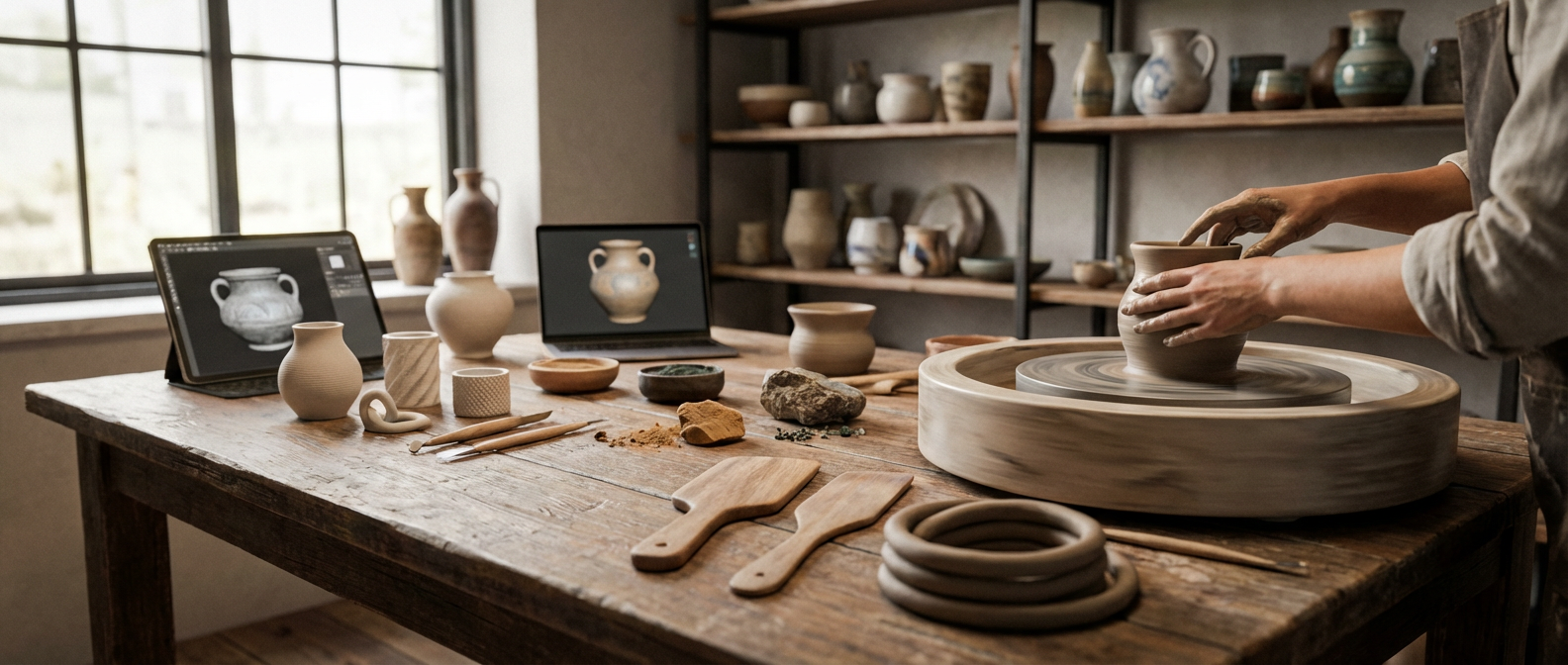
Picture this: you’re holding a ceramic mug, steam rising from your morning coffee, and suddenly you’re connected to a potter who lived four thousand years ago in the Indus Valley. That rim you’re drinking from? It echoes the same subtle curve that ancient hands perfected along riverbanks in Harappa. This isn’t romantic nostalgia talking. This is what’s happening right now in ceramics studios worldwide, where artists are reaching backward through millennia to find their way forward.

The Potter's Thread: How Ancient Hands Still Shape Our Clay
The Potter’s Thread: How Ancient Hands Still Shape Our Clay

The beauty of ceramic traditions lies not in their preservation under glass, but in their stubborn refusal to die. Unlike painting movements that come and go with the cultural tide, ceramic techniques embed themselves in muscle memory, in the physics of clay and fire, in the relationship between human hands and earth. When a modern potter sits at their wheel, they’re not just creating. They’re joining a conversation that began when our ancestors first discovered that certain muds could hold their shape and transform in fire.

What grabs me most is how these ancient methods aren’t museum pieces being dusted off for novelty. They’re living practices that contemporary artists are rediscovering because they work. Because they solve problems our modern techniques sometimes can’t. Because they carry within them an understanding of materials that took centuries to develop and seconds to lose when industrialization swept through pottery studios in the 19th and 20th centuries.

The Japanese Legacy: Wabi-Sabi Meets Silicon Valley

Walk into any high-end ceramics gallery in Brooklyn or Los Angeles today, and you’ll see it immediately: the influence of Japanese tea ceremony aesthetics. But this isn’t the surface-level adoption of “Japanese minimalism” that infected home décor magazines in the 2000s. Contemporary ceramicists like Adam Silverman and Helen Levi are going deep into the technical aspects of Japanese ceramic traditions, studying how 16th-century tea masters achieved those deliberately imperfect glazes and asymmetrical forms that make your heart skip a beat.

The technique of raku firing, developed in 1580s Japan, has found new life in studios from Portland to Prague. The process means removing red-hot ceramics from the kiln and placing them in combustible materials like newspaper or sawdust. The dramatic temperature change creates unpredictable crackling patterns and metallic lusters that no computer program could replicate. Modern artists aren’t just copying this technique. They’re extending it, using contemporary materials and scientific understanding to push beyond what ancient Japanese potters could achieve.

What strikes me about this revival is how it challenges our digital age’s obsession with control and predictability. These Japanese-influenced pieces celebrate the beauty of chance, the wisdom of accepting what fire and clay decide to create together. It’s meditation made tangible, philosophy you can hold in your hands.

The Islamic Connection: Geometry Meets Contemporary Form

Meanwhile, something equally compelling is happening with Islamic ceramic traditions. The mathematical precision of 10th-century Persian lustre pottery is coming back through contemporary artists who understand that those ancient geometric patterns weren’t mere decoration. They were sophisticated explorations of light, reflection, and the infinite. Artists like Prue Venables and Richard Slee are picking up these metallic glazing techniques not as cultural appropriation, but as respectful exploration of technologies that achieved effects we’re still trying to understand.

The tin-opacified glazes first perfected in 9th-century Iraq are showing up in galleries from London to Melbourne. These glazes create surfaces that seem to glow from within, achieving a depth and luminosity that modern industrial glazes struggle to match. Contemporary ceramicists are discovering that these “primitive” techniques often produce more sophisticated visual effects than anything coming out of modern ceramic chemistry labs.

What moves me about this cross-cultural exchange is watching artists approach these traditions with genuine humility. They’re not trying to improve upon perfection, but to understand it well enough to make it speak in a contemporary voice. The geometric patterns that once adorned mosque walls now wrap around vessels that might hold flowers from a modern garden, creating objects that exist comfortably in both time periods at once.

Chinese Whispers: Porcelain’s Eternal Return

But perhaps nowhere is the ancient-modern dialogue more intense than in the revival of Chinese ceramic techniques. The secret of true porcelain, lost and found and lost again over centuries, continues to obsess contemporary ceramicists. Artists like Young Sook Park are spending decades mastering the celadon glazing techniques that Chinese potters perfected during the Song Dynasty. These glazes achieve colors that seem impossible: jade greens that shift to blue in changing light, surfaces so smooth they feel like silk.

The technical challenges are staggering. Achieving authentic celadon requires understanding not just chemistry, but the subtle relationships between clay body, glaze composition, kiln atmosphere, and firing temperature that Chinese masters spent lifetimes perfecting. Modern ceramicists have the advantage of contemporary scientific understanding, but they’re discovering that knowledge alone isn’t enough. These techniques require something that can’t be learned from textbooks: an instinctive understanding of how materials behave under extreme conditions.

What grabs me is watching contemporary artists use these ancient techniques to address thoroughly modern concerns. Ceramic artist Ai Weiwei’s work with traditional Chinese pottery techniques becomes a commentary on cultural heritage and political change. His dropped Han Dynasty urns speak to the violence of progress, while his massive installations using traditional blue and white porcelain patterns explore questions of authenticity and reproduction in our digital age.

The Underground Renaissance

This revival isn’t happening in isolation. Across the ceramics world, artists are forming communities around the shared exploration of ancient techniques. Wood-firing kilns, some of the oldest ceramic technologies known to humanity, are making a remarkable comeback. These kilns require days of constant attention, collaborative efforts between artists, and an acceptance of unpredictable results that goes against everything our efficiency-obsessed culture teaches us to value.

Artists like Jack Troy and Malcolm Davis have become something like ceramic archaeologists, documenting and teaching techniques that were nearly lost to industrialization. Their workshops and writings are keeping alive the knowledge of how ash naturally occurring in wood-fired kilns can create glazes of extraordinary subtlety and beauty. Contemporary ceramicists are discovering that these “inefficient” methods often produce results impossible to achieve with modern electric or gas kilns.

The environmental movement has added new urgency to this exploration. As artists become more conscious of their carbon footprints, many are turning to ancient techniques that worked with local materials and sustainable practices. Solar kilns, burnout techniques using organic materials, and glazes made from local ash and clay are not just aesthetically interesting but environmentally responsible.

What excites me most about this ancient-modern synthesis is how it’s creating objects that couldn’t have existed in any other era. These pieces carry the weight of history while speaking fluently to contemporary sensibilities. They prove that looking backward can be the most radical way forward, that innovation sometimes means remembering what we’ve forgotten rather than inventing what’s never been. If you’re curious about seeing this synthesis firsthand, I’d love to hear about ceramic works that have caught your eye lately, or ancient techniques you think deserve a contemporary revival.

Posted in Default | Comments Off on The Potter’s Thread: How Ancient Hands Still Shape Our Clay

The Sacred Thread: How Ancient Textile Traditions Weave Stories Through Time

When Threads Become Language

There’s something almost mystical about watching an elderly woman’s hands work a traditional loom. The rhythmic dance of warp and weft creates more than fabric—it creates a living manuscript of cultural memory. Last month, I found myself in a small workshop in Peru, mesmerized by how each pass of the shuttle carried forward techniques unchanged for over a thousand years. The textile artist wasn’t just making cloth; she was speaking in a language her ancestors developed, one that survives in the tension of each thread.

Traditional textile arts work like cultural DNA, encoding everything from social status to spiritual beliefs into their very structure. Consider the complex ikat patterns of Indonesia, where the threads are resist-dyed before weaving begins. This pre-planning requires mathematical precision and generational knowledge—you can’t simply improvise your way through a true ikat design. The blurred edges that define the technique aren’t accidents; they’re the visual signature of a process that demands the weaver think in layers of time, planning the pattern before the loom is even strung.

What fascinates me most is how these traditions encode information that goes far beyond decoration. In many cultures, specific patterns indicate the weaver’s village, marital status, or even spiritual protection. The geometric motifs in Navajo rugs aren’t arbitrary—they represent sacred elements like mountains, lightning, and rain clouds. Each textile becomes a three-dimensional prayer, a meditation woven into physical form.

The Architecture of Ancient Looms

The tools themselves tell stories that span millennia. I’ve spent hours studying the backstrap loom, a deceptively simple device that has little more than sticks and string yet enables the creation of textiles of extraordinary complexity. The weaver becomes part of the loom itself, using body tension to control the warp threads. This intimate relationship between maker and tool creates a feedback loop where the textile literally bears the imprint of the weaver’s breathing, posture, and rhythm.

Compare this to the massive draw looms of medieval Europe, mechanical marvels that required multiple operators and could produce elaborate figured silks with thousands of different colored threads. These looms were the computers of their time, using a punch-card system of string heddles to encode pattern information. When you examine a piece of Byzantine silk under magnification, you’re looking at the output of a sophisticated information processing system that predates digital technology by centuries.

The cultural implications run deeper than mere technique. In ancient Egypt, linen production was so central to civilization that the quality of cloth determined social hierarchy. The finest royal linens required thread so thin that modern machinery struggles to replicate it. Archaeological evidence suggests that achieving this level of refinement required specialized knowledge passed down through generations of artisans, creating a technological tradition as sophisticated as any modern manufacturing process.

Reading the Cultural Code in Pattern and Color

Every traditional textile culture develops its own visual vocabulary, and learning to read these symbols is like acquiring fluency in a complex language. Take the resist-dye traditions of West Africa, where indigo blues carry meanings that shift based on pattern density, geometric arrangement, and the specific resist techniques used. Adinkra cloth from Ghana employs a symbolic system so sophisticated that master printers must memorize hundreds of distinct stamps, each carrying specific philosophical or historical meanings.

The color palettes alone reveal entire worlds of cultural knowledge. The deep crimsons achieved through cochineal insects in pre-Columbian American textiles required not just access to the insects themselves, but understanding of mordants, pH levels, and processing techniques that took generations to perfect. When Spanish colonizers encountered textiles dyed with these colors, they were seeing the end result of centuries of accumulated chemical knowledge, encoded in the hands and minds of indigenous dyers.

Pattern transmission follows its own fascinating logic. In many traditions, designs are never drawn or written down—they exist only in the memory and muscle memory of practitioners. I’ve watched master weavers in Guatemala work complex brocade patterns purely from internal visualization, their hands moving with the certainty of someone reciting a poem learned in childhood. This embodied knowledge creates textiles that carry the maker’s individual interpretation while remaining true to ancestral forms.

The Living Archaeology of Technique

What strikes me repeatedly is how textile traditions preserve technological knowledge that would otherwise disappear. Traditional felt-making among Central Asian nomads, for example, maintains an understanding of fiber behavior and temperature control that connects directly to the physics of molecular bonding. The process requires precise timing and pressure that can’t be captured in written instructions—it lives in the maker’s hands and intuitive understanding of how wool responds to heat, moisture, and friction.

Archaeological textiles provide tantalizing glimpses into lost techniques. The silk textiles recovered from the Silk Road reveal weaving methods so complex that textile historians are still working to decode them. Some show evidence of weaving techniques that appear nowhere else in the historical record, suggesting that entire traditions vanished without leaving written documentation. These fragments become puzzles that challenge our understanding of historical technological capabilities.

Contemporary artisans working to revive historical techniques often discover that traditional methods encode solutions to problems that modern technology addresses differently but not necessarily better. Natural dye traditions, for instance, often include mordanting and processing steps that create more colorfast results than many synthetic alternatives. The traditional knowledge represents thousands of years of experimentation and refinement.

Where Ancient Wisdom Meets Contemporary Expression

The most exciting developments in contemporary textile arts happen when artists understand traditional techniques deeply enough to push them in new directions. I’m thinking of artists like Sheila Hicks, whose massive fiber installations grow from mastery of fundamental weaving principles, or the way contemporary African textile artists blend traditional resist techniques with modern synthetic dyes to create entirely new visual languages.

This isn’t about nostalgic preservation—it’s about recognizing that traditional techniques represent sophisticated solutions to fundamental problems of how to manipulate fiber, color, and structure. When contemporary makers truly understand these foundations, they can innovate in ways that honor the tradition while expanding its possibilities. The techniques become tools for contemporary expression rather than museum pieces.

The democratization of traditional knowledge through digital documentation creates both opportunities and challenges. YouTube videos can teach basic techniques to global audiences, but they can’t transmit the subtle knowledge that comes from years of practice or the cultural context that gives meaning to specific patterns. The challenge becomes how to respect and preserve the cultural significance of these traditions while allowing for creative evolution and cross-cultural exchange.

Every thread in traditional textiles connects us to human ingenuity across time and culture. Whether you’re examining the mathematical precision of Islamic geometric patterns or the organic complexity of Celtic knotwork, these traditions invite us to slow down and appreciate the profound intelligence embedded in handmade objects. What traditional textile techniques have captured your imagination, and how do you see their wisdom applying to contemporary creative practice?

Posted in Default | Comments Off on The Sacred Thread: How Ancient Textile Traditions Weave Stories Through Time

The Artists Who Painted Through Locked Studio Doors

When Museum Labels Tell Half Stories

Standing in front of Judith Leyster’s “Self-Portrait” at the National Gallery of Art, most visitors read the wall text mentioning she was “one of the few known female painters of the Dutch Golden Age.” But here’s what that polite museum language doesn’t tell you: Leyster ran her own workshop, took on male apprentices, and sued Frans Hals when he poached one of her students. She wasn’t just painting pretty still lifes in her spare time between household duties. She was competing directly with the boys’ club of 17th-century Dutch masters, and winning.

This sanitized presentation of women artists as rare exceptions rather than active participants reveals how thoroughly their stories have been edited. When we dig beneath these careful museum descriptions, we find artists who didn’t just overcome obstacles—they dismantled them entirely, often creating new artistic languages in the process.

The Erasure Happened in Real Time

Take Sofonisba Anguissola, who painted some of the most psychologically complex portraits of the 16th century. Michelangelo himself mentored her, and she became court painter to Philip II of Spain. Yet within a generation of her death, art historians began attributing her paintings to male contemporaries. Her “Portrait of the Artist’s Sisters Playing Chess” was credited to her brother for centuries, despite clear documentary evidence of her authorship.

This wasn’t accidental oversight. The 18th and 19th centuries saw the systematic professionalization of art history as an academic discipline, coinciding with increasingly rigid ideas about women’s proper spheres. Giorgio Vasari’s influential “Lives of the Artists” included several women painters, but later art historians quietly dropped them from the canon. They created a feedback loop: if women weren’t mentioned in the standard texts, they couldn’t be that important, and if they weren’t important, why waste precious page space on them?

The mechanics of this erasure were surprisingly simple. Attribution became increasingly conservative, with doubtful works defaulting to “unknown” or male artists rather than documented female ones. Paintings by women were often described as “attributed to” or “in the manner of,” language that subtly questioned their authenticity while similar works by men received confident attributions.

Hidden Networks and Alternative Spaces

Women artists didn’t disappear because they stopped creating. They built parallel networks that art historians largely ignored. In 18th-century Paris, Élisabeth Vigée Le Brun and other women artists created alternative exhibition spaces when the official Salon restricted their participation. These weren’t desperate makeshift galleries, they were sophisticated artistic enterprises that attracted international collectors and critics.

Consider the Bloomsbury Group’s women artists like Vanessa Bell and Dora Carrington. While their male counterparts got solo museum exhibitions, these women were often relegated to footnotes about their relationships with famous men. But Bell’s innovative approach to color and form influenced British modernism as much as any of her male contemporaries. Her 1917 painting “Abstract Painting” predates many celebrated male abstract works, yet it rarely appears in surveys of early abstraction.

Even more revealing are the collective spaces women created. The Philadelphia Ten, active from 1917 to 1945, organized traveling exhibitions that reached audiences across the United States. These weren’t amateur hobby groups, they included nationally recognized artists like Theresa Ferber Bernstein, whose urban scenes captured New York’s energy with the same intensity as the Ashcan School painters who dominate art history textbooks.

The Tools They Invented When Doors Stayed Locked

Exclusion bred innovation. Denied access to traditional training, women artists developed techniques that later influenced entire movements. Mary Cassatt’s pastel work emerged partly because oil painting required extensive studio training she couldn’t access as easily as her male counterparts. Her mastery of pastels influenced the entire Impressionist circle’s approach to the medium.

Augusta Savage faced double barriers as a Black woman artist in 1920s America. When the French government denied her a fellowship to study in Paris because of her race, she transformed rejection into artistic fuel. Her Harlem Community Art Center became a breeding ground for the next generation of African American artists, including Jacob Lawrence. Her sculpture “The Harp” reimagined a group of singing children as the strings of a harp, creating a visual metaphor that connected spirituals, jazz, and classical music in bronze.

These alternative approaches weren’t consolation prizes. Käthe Kollwitz’s focus on printmaking allowed her to reach working-class audiences in ways oil painting never could. Her lithographs and woodcuts spoke directly to people experiencing poverty and war, creating an intimacy between artist and viewer that aristocratic portrait painting couldn’t achieve. When we recognize these choices as artistic innovations rather than limitations, the entire landscape of modern art shifts into sharper focus.

Seeing What Was Always There

The revelation isn’t that women artists existed, it’s recognizing how thoroughly their contributions shaped the art we already admire. When you look at those Rothko color fields again, consider Helen Frankenthaler’s soak-stain technique, developed in the early 1950s. Her method of letting paint soak directly into unprimed canvas created the foundation for an entire generation of Color Field painters, including Rothko’s later work.

This isn’t about creating a separate “women’s art history.” It’s about understanding that the story we thought we knew was incomplete. Louise Bourgeois worked for decades in relative obscurity before her first retrospective at age 71. Her exploration of psychological space through sculpture predated and influenced much of what we consider cutting-edge contemporary art. The spiders, the cells, the fabric works, they weren’t late-career diversions but lifelong investigations that finally found their moment.

Next time you’re in a museum, read between the lines of those wall labels. When you see “influenced by” or “associated with,” ask who might be missing from the frame. The artists were there all along, painting through locked studio doors, creating new visual languages when the old ones excluded them. Now we just need to learn how to see what was always there.

Posted in Default | Comments Off on The Artists Who Painted Through Locked Studio Doors

In Memoriam: The Kitchen Table Studio That Never Was

The Death of Excuses: Why Your Perfect Studio Was Always a Myth

Let us gather today to mourn the passing of a beloved fiction: the idea that you need a perfect studio space to make meaningful art. This cherished delusion lived a long and comfortable life in the minds of countless artists, fed by glossy magazine spreads of sun-drenched lofts and Instagram posts of pristinely organized supply cabinets. It died quietly last Tuesday when I watched my neighbor create a gorgeous watercolor series on her fire escape, using nothing but a folding TV tray and a mason jar for water.

In Memoriam: The Kitchen Table Studio That Never Was

Some of history’s most powerful work emerged from cramped, improvised spaces. Basquiat painted on doors he found on the street. Van Gogh created masterpieces in a yellow house barely larger than a modern studio apartment. Georgia O’Keeffe painted her New Mexico landscapes at a card table. They understood what we often forget: the magic isn’t in the room. It’s in the relationship between your hands, your materials, and your willingness to begin.

Your first studio doesn’t need to be a shrine to creativity. It needs to be functional, accessible, and forgiving of mistakes. Think of it as a laboratory rather than a gallery, a place where you can experiment without the pressure of perfection. The corner of your bedroom works. The dining room table after dinner works. Even a wheeled cart that can move from room to room can become the foundation for serious artistic practice.

Illustration for In Memoriam: The Kitchen Table Studio That Never Was

How Light Shapes Your Creative Day

Every space has its own personality shaped by light, and learning to read these rhythms is like understanding the brushstrokes in a Vermeer painting. North-facing windows offer the holy grail of consistent, cool light that doesn’t shift dramatically throughout the day. Traditional artist studios were built with large north-facing windows for good reason, creating steady illumination that lets you see colors as they truly are, not tinted by the warm embrace of southern exposure or the dramatic mood swings of western light.

But don’t despair if your space faces south or west. The Impressionists built entire movements around chasing changing light, understanding that the golden hour transforms ordinary subjects into something transcendent. Learn your space’s light patterns like you would study the composition of a favorite painting. Notice how morning light hits your easel differently than afternoon sun. Watch where shadows fall at different times of day.

If natural light is limited, invest in quality artificial lighting that mimics daylight. A combination of overhead lighting and adjustable task lights can create a flexible environment that adapts to different media and moods. Think about your studio’s lighting as carefully as a museum curator plans gallery illumination. The difference between harsh fluorescent bulbs and full-spectrum LED lights is the difference between seeing colors through muddy water and crystal-clear glass.

Organization That Actually Works

Organization in a studio space isn’t about achieving Pinterest-worthy aesthetics. It’s about creating systems that support flow states rather than interrupting them. Think of how a medieval illuminator arranged their workspace, with different pigments within arm’s reach and brushes organized by size and purpose. Every tool had its place not for tidiness, but because interrupting creative momentum to hunt for supplies breaks the spell between artist and work.

Start with your most frequently used materials and build outward from there. Your primary palette, whether it’s watercolor tubes, charcoal sticks, or digital styluses, should live within easy reach of your dominant hand. Secondary supplies can occupy middle-distance storage, while specialty materials and reference books can live on the periphery. This creates concentric circles of accessibility that mirror the way you actually work, not the way organization blogs suggest you should work.

Vertical storage becomes your best friend in small spaces. Wall-mounted magnetic strips can hold metal tools, pegboards can organize everything from brushes to scissors, and floating shelves keep supplies visible and accessible without claiming precious horizontal real estate. Japanese woodblock artists organized their studios with every tool hanging in its designated spot, creating both functional efficiency and visual harmony.

Choosing Surfaces That Improve With Age

Your work surface will become an archaeological record of your artistic journey, accumulating layers of paint, charcoal dust, ink stains, and the ghost impressions of countless drawings. Choose materials that welcome this patina rather than fighting it. A simple wooden table develops character with each project, its scars and stains becoming a visual diary of your creative evolution.

For messy media like oil paints or printmaking inks, consider covering your surface with brown kraft paper or newsprint that can be replaced as needed. This creates a protective barrier while maintaining the tactile experience of working on paper. Glass or sealed wood surfaces work beautifully for watercolors and drawing, allowing you to wipe clean between sessions while preserving the underlying character of the surface.

Height matters more than you might think. Your work surface should allow your arm to move freely without hunching your shoulders or straining your back. This isn’t just about comfort, it affects the quality of your mark-making. Notice how calligraphers adjust their table height to allow their entire arm to participate in creating each stroke. The same principle applies whether you’re sketching portraits or mixing colors.

The Ritual of Beginning

Even in shared spaces, you can create psychological boundaries that signal the beginning and end of studio time. This might be as simple as laying out a special cloth, lighting a candle, or playing particular music that your brain associates with creative work. These rituals have the same function as the formal opening of a traditional Japanese tea ceremony, creating a mental transition from everyday consciousness to creative presence.

Consider storage solutions that allow for quick setup and breakdown if you’re working in a multipurpose space. A rolling cart, a dedicated basket, or even a vintage suitcase can hold your essential supplies and transform any surface into a studio within minutes. The key is consistency: use the same setup process each time so your brain begins to associate these actions with creative readiness.

Your studio space, however humble, becomes a portal between the mundane world and the realm of creative possibility. It doesn’t need to be large or impressive to be sacred. It simply needs to be yours, arranged according to your rhythms and responsive to your materials. What stories will your first studio hold? What paintings will remember the light from that particular window, what drawings will carry the grain of that wooden table? Set up your space with intention, work in it with presence, and trust that the art will find its way into being.

Posted in Default | Comments Off on In Memoriam: The Kitchen Table Studio That Never Was

Your Watercolor Journey Starts Here: The Essential Tools That Will Change Everything

The Magic Lives in Your Brush (But Not All Brushes Are Created Equal)

Picture this: you’re standing in the art supply aisle, overwhelmed by rows of brushes that all look mysteriously similar yet wildly different in price. Here’s what I wish someone had told me when I started: invest in three quality brushes rather than twenty mediocre ones. Your watercolor journey will thank you.

Your Watercolor Journey Starts Here: The Essential Tools That Will Change Everything

Start with a round brush in size 12 or 14. This becomes your workhorse, capable of both broad washes and surprising detail work when you use just the tip. Look for natural hair if your budget allows. Sable holds the most water and maintains its point beautifully. Synthetic brushes have improved dramatically, though, and brands like Princeton Neptune offer excellent alternatives that won’t break the bank.

Add a smaller round in size 6 for detail work and a flat brush around 1 inch wide for laying down those gorgeous, even washes that make watercolor sing. Think of Winslow Homer’s seascapes. Those luminous skies didn’t happen by accident. They came from understanding how the right brush delivers pigment to paper in exactly the way the artist envisioned.

Illustration for Your Watercolor Journey Starts Here: The Essential Tools That Will Change Everything

Paper That Understands Water (Because Regular Paper Definitely Doesn’t)

Here’s where many beginners stumble, and I don’t blame them. Regular paper and watercolor have about as much compatibility as oil and water, which is to say, none at all. Watercolor paper isn’t just thicker. It’s engineered specifically to handle the unique demands of water-based pigments.

Look for paper labeled 140lb weight as your starting point. This weight strikes the perfect balance between affordability and performance. Cold-pressed paper gives you that lovely subtle texture that catches paint beautifully. Think of how Alvaro Castagnet’s architectural paintings seem to glow partly because of how his pigments settle into the paper’s grain.

Hot-pressed paper, while smoother, can be trickier for beginners since paint tends to slide around more. Rough paper offers maximum texture but can overwhelm delicate work. Start with cold-pressed, and as you develop your style, you’ll naturally gravitate toward what works best for your artistic vision.

Pigments That Sing (Understanding Your Color Companions)

Walk into any art store and you’ll find watercolor sets with 24, 36, even 48 colors. Resist this siren call. The masters worked with far fewer pigments than we have access to today, and their color mixing skills were legendary because they had to be.

Begin with a limited palette: Cadmium Yellow Light, Cadmium Red Medium, Ultramarine Blue, Burnt Umber, and Payne’s Gray. These five pigments can create an astonishing range of colors and will teach you color theory in the most practical way possible. When you mix Ultramarine Blue with Burnt Umber, you’ll discover the most beautiful range of grays, far more interesting than any pre-mixed gray could ever be.

Quality matters here more than quantity. Student-grade paints contain more binder and less pigment, which means muddier colors and less vibrancy. Professional-grade pigments cost more upfront but offer intensity and mixing capabilities that will make your paintings luminous. Think of J.M.W. Turner’s incredible atmospheric effects. Those were impossible without high-quality, transparent pigments that layer beautifully.

The Supporting Cast (Small Tools That Make Big Differences)

Every watercolorist needs a few humble heroes that don’t get much attention but make everything else possible. Natural sponges become your texture-creating allies. They lift paint, create cloud effects, and add organic patterns that brushes simply can’t achieve. Sea sponges work best because their irregular structure creates more interesting marks than synthetic versions.

Masking fluid protects your whites and light areas while you work around them. It’s like having a safety net for highlights. Cotton swabs and paper towels aren’t glamorous, but they’re necessary for lifting wet paint and creating soft edges. Keep a spray bottle nearby for rewetting areas or creating interesting backruns, those beautiful blooming effects that happen when wet paint meets damp paper.

Don’t overlook your palette. A large, white ceramic or enamel palette gives you room to mix colors properly and see them accurately. Those tiny watercolor pans that come with student sets offer nowhere near enough space for serious color mixing. Think of your palette as your composer’s keyboard. You need room to create.

Setting Up Your Creative Space (Where the Magic Actually Happens)

Your workspace doesn’t need to be a dedicated studio, but it needs to function well. Good lighting prevents color mistakes. Natural north light is ideal, but a quality daylight bulb works too. You’ll need two water containers: one for clean water, one for rinsing brushes. This simple system keeps your colors pure and prevents muddy mixtures.

Consider your surface angle. Watercolor behaves differently on flat versus tilted paper. A simple wooden board that you can adjust will give you control over how paint flows and pools. Sometimes you want gravity to help create soft, flowing washes. Other times, you need your paper flatter to maintain crisp edges and controlled details.

The beauty of watercolor lies in its immediacy and transparency, qualities that these tools are designed to preserve and enhance. Unlike oil painting, where you can endlessly rework areas, watercolor rewards confident decisions and embraces happy accidents. Your tools should support this philosophy, giving you control when you need it and stepping out of the way when intuition takes over.

Start with these basics, and you’ll discover that watercolor isn’t just about making pictures. It’s about capturing light, emotion, and fleeting moments in ways that no other medium can match. What will you paint first?

Posted in Default | Comments Off on Your Watercolor Journey Starts Here: The Essential Tools That Will Change Everything

Creating Your Sacred Creative Space: A Studio Setup That Actually Works

The Foundation: Understanding Your Creative Rhythms

Before you buy a single easel or arrange your first still life, spend a week observing how you naturally move through creative work. Do you paint with broad, sweeping gestures that require arm movement, or do you work in tight, controlled details? Are you someone who spreads materials across every surface, or do you prefer everything within arm’s reach? I learned this lesson the hard way when I set up my first studio with a tiny desk against a wall, only to realize I’m a “spread it all out” painter who needs to step back frequently to assess my work.

Creating Your Sacred Creative Space: A Studio Setup That Actually Works

The most successful home studios aren’t copied from magazines or Instagram feeds. They grow from understanding your specific creative process. Notice whether you work better with morning light streaming through east-facing windows or prefer the controlled environment of artificial lighting. Pay attention to whether you need complete silence or work better with background noise. These observations will guide every decision from room selection to furniture placement.

Document your current creative habits, even if you’re working at the kitchen table. Do you consistently reach for certain tools first? How often do you need to reference books or images? This baseline understanding prevents you from creating a beautiful studio that doesn’t actually support how you work.

Illustration for Creating Your Sacred Creative Space: A Studio Setup That Actually Works

Light: The Make-or-Break Element of Any Studio

Natural light changes throughout the day, shifting the appearance of colors in ways that can either enhance or sabotage your work. North-facing windows give you the most consistent natural light. Artists have loved them for centuries because they eliminate the harsh shadows and color shifts that come with direct sunlight. If you’re stuck with south-facing windows, invest in adjustable blinds or curtains to control the intensity.

Artificial lighting isn’t just a backup plan for cloudy days. Full-spectrum LED bulbs with a color temperature between 5000K and 6500K most closely mimic natural daylight. Position multiple light sources to eliminate shadows on your work surface. I use a combination of overhead track lighting and adjustable desk lamps, which lets me control both general illumination and focused task lighting.

Consider the color of your walls when planning lighting. Pure white can create harsh reflections, while very dark colors absorb light you might need. A soft, neutral gray gives you an excellent backdrop that won’t interfere with color perception while maintaining good light reflection. The goal is even, consistent illumination that reveals true colors without creating glare or deep shadows.

Storage Systems That Actually Function

Effective studio storage isn’t about hiding your materials away. It’s about creating systems that make everything accessible when inspiration strikes. Open shelving works beautifully for frequently used items. Drawers handle smaller tools and supplies that would otherwise create visual chaos. I organize my oil paints by temperature rather than alphabetically, keeping warm colors together and cool colors grouped separately. This system reflects how I actually think about color relationships while painting.

Vertical storage maximizes space in smaller studios. Pegboards accommodate tools of various sizes and can be reconfigured as your needs change. Rolling carts work as mobile supply stations that can move between work areas. For works in progress, a dedicated drying rack or storage system prevents damage and keeps pieces organized by project or timeline.

Think about how different materials require different storage conditions. Papers need protection from humidity and light, while certain mediums must be stored at specific temperatures. Oil paints stay workable longer when kept cool. Acrylics need protection from freezing. Your storage solutions should protect your investment in quality materials while keeping them readily available.

Work Surfaces and Furniture That Support Your Body

The relationship between your body and your work surface directly impacts both comfort and creative output. An easel isn’t just a painting holder. It positions your work at the optimal angle and height for your posture and arm movement. Table easels work well for detailed work or smaller pieces, while standing easels support the full-body engagement that many painters prefer for larger works.

Adjustability is huge for any furniture piece you’ll use for extended periods. A height-adjustable stool lets you alternate between sitting and standing, preventing the fatigue that comes from maintaining one position too long. Your work surface should be at elbow height when seated, allowing your arms to work comfortably without hunching or reaching.

Consider the specific demands of your medium when selecting work surfaces. Printmaking requires a sturdy table that can handle pressure and potentially corrosive chemicals. Watercolor painting benefits from a surface that can be tilted to control paint flow. Oil painting needs a surface that can handle solvents and won’t be damaged by scraping or heavy pressure. The surface material matters too. Glass gives you an easy-to-clean palette surface, while disposable palette paper offers convenience for quick color studies.

Creating Atmosphere That Nurtures Creativity

Your studio atmosphere extends beyond functional considerations to encompass the sensory environment that supports your creative mindset. Temperature control affects both your comfort and your materials. Many mediums perform differently in various temperatures and humidity levels. Adequate ventilation protects your health when working with solvents or fixatives while preventing material contamination from airborne particles.

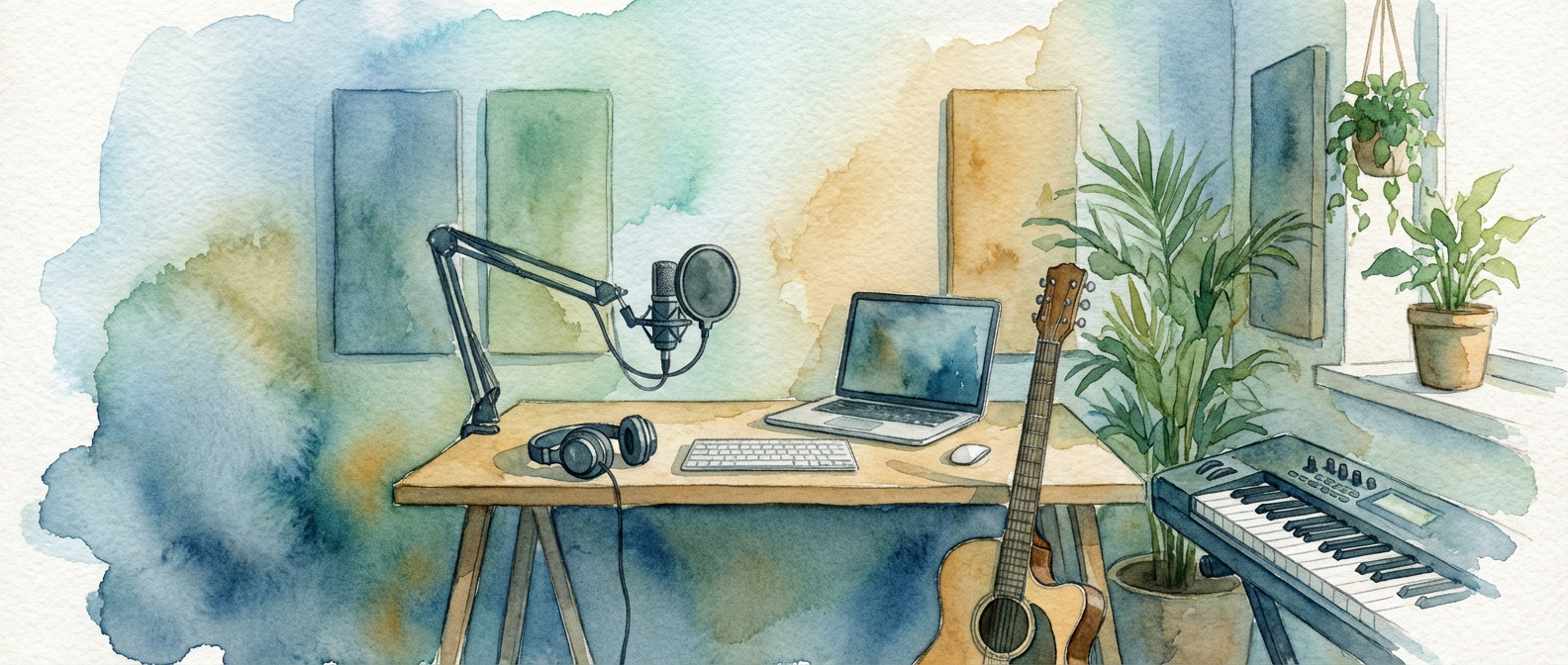
Sound consideration often gets overlooked in studio planning. Hard surfaces create echoes that can be distracting, while soft furnishings absorb sound. Some artists need complete quiet, while others work better with music or ambient noise. Plan your space to accommodate your audio preferences without disturbing others in your home.

Personal touches transform a functional space into a genuinely inspiring environment. Display works by artists you admire, not for showing off but for daily inspiration and learning. Keep reference books within easy reach. Include plants if you enjoy them and they thrive in your lighting conditions. The goal is creating a space that feels genuinely yours, where you want to spend time even when you’re not actively creating.

Your first studio setup won’t be your last. As your work evolves and you gain experience, you’ll naturally modify and improve your space. Start with the basics that support your current practice, and build from there. What aspects of studio setup are you most curious about? I’d love to hear about your own space-planning discoveries and challenges.

Posted in Default | Comments Off on Creating Your Sacred Creative Space: A Studio Setup That Actually Works

In the Potter’s Time Machine: How Ancient Hands Shape Tomorrow’s Clay

The Whisper of Ancient Tools in Modern Studios

Walking through the ceramics wing at the Metropolitan Museum, I pause before a Tang dynasty horse, its cream glaze pooling in familiar ways around the muscular haunches. Across town in Brooklyn, potter Sarah Chen pulls a similar vessel from her kiln, the glaze settling into those same gravity-defying pools. The connection isn’t coincidental. Chen, like thousands of contemporary ceramicists, draws directly from techniques perfected over millennia, creating a living bridge between ancient workshops and today’s artist studios.

In the Potter's Time Machine: How Ancient Hands Shape Tomorrow's Clay
In the Potter’s Time Machine: How Ancient Hands Shape Tomorrow’s Clay

This isn’t mere homage or nostalgic recreation. Modern ceramicists are archaeological detectives, reverse-engineering glazes from pottery shards, studying firing patterns in ancient kilns, and adapting traditional hand-building methods to express thoroughly contemporary ideas. The result is a field where innovation springs directly from the deepest wells of human creativity, where understanding the past becomes the key to unlocking the future.

What strikes me most is how these ancient techniques solve problems that digital-age potters still face. The Japanese concept of wabi-sabi, born from 15th-century tea ceremony aesthetics, provides a framework for embracing the unpredictability that frustrates many beginning ceramicists. Korean moon jars from the Joseon dynasty offer lessons in achieving perfect asymmetry that contemporary artists like Ai Weiwei have adopted for large-scale installations.

Illustration for In the Potter's Time Machine: How Ancient Hands Shape Tomorrow's Clay
Illustration for In the Potter’s Time Machine: How Ancient Hands Shape Tomorrow’s Clay

The Alchemy of Ancient Glazes

Standing in ceramicist Mark Johnson’s Oakland studio, I watch him prepare a celadon glaze using a recipe that traces back to Song dynasty China. The subtle green-gray that emerges from his reduction kiln carries the same ethereal quality that made these glazes treasures worthy of imperial collections. Johnson spent three years studying historical firing techniques, learning to read the flame’s color and the kiln’s breathing patterns the way medieval potters did.

The technical precision required is staggering. Celadon’s signature color comes from iron oxide in a carefully controlled atmosphere where oxygen is systematically reduced. Too much oxygen and the glaze turns yellow-brown. Too little, and it becomes muddy gray. Chinese potters perfected this dance between fire and chemistry over centuries, knowledge that was closely guarded and passed down through generations of master craftsmen.

Modern ceramicists like Johnson don’t simply copy these formulas, they interpret them. His celadon vessels incorporate contemporary forms while honoring the glaze’s historical integrity. A recent series of large planters uses traditional celadon on angular, architectural shapes that wouldn’t look out of place in a modern home. The ancient technique becomes a vocabulary for speaking about today’s aesthetic concerns.

This revival extends beyond East Asian traditions. Pueblo pottery techniques from the American Southwest are experiencing a renaissance among contemporary artists. Maria Martinez’s blackware methods, refined in the early 20th century but rooted in ancestral Pueblo practices, inspire ceramicists worldwide who seek alternatives to industrial glazing. The smoke-fired surfaces and burnished terra sigillata finishes create depth that synthetic glazes struggle to match.

Hand-Building’s Timeless Logic

The pottery wheel gets most of the attention, but hand-building techniques tell ceramics’ deeper story. In her Harlem studio, artist Theaster Gates shapes vessels using coil-building methods that connect directly to African pottery traditions. Each coil is rolled by hand, joined to the next with fingers that understand clay’s plasticity in ways no machine can replicate. The resulting forms carry the maker’s presence in every curve and joint.

Gates’s work demonstrates how ancient techniques carry cultural memory. His vessels reference African pottery forms while addressing contemporary themes of urban decay and renewal. The hand-building process itself becomes part of the artwork’s meaning, connecting viewers to thousands of years of human creativity. When Gates fires these pieces using traditional methods, the unpredictability of flame and smoke creates surfaces that no industrial process could duplicate.

Coil-building techniques from different cultures offer distinct approaches to form and structure. Pueblo potters developed methods for creating large water vessels with walls thin enough to keep contents cool through evaporation. Japanese raku practitioners perfected rapid firing and cooling techniques that create dramatic crackling patterns. Contemporary artists combine these approaches, using Pueblo construction methods with raku firing or applying Japanese glazing techniques to African-inspired forms.

The Digital Kiln: Where Ancient Meets Algorithm

Technology transforms how contemporary ceramicists approach ancient techniques without replacing them. Digital pyrometers allow precise temperature control that helps artists replicate historical firing conditions more accurately than ever before. Computer modeling helps predict how glazes will flow and pool, reducing the waste that comes with experimental firing.

Artist Jennifer Rubell uses 3D printing to create complex ceramic forms that would be impossible to throw on a wheel, then finishes them with glazes based on 18th-century European formulas. The contrast between cutting-edge forming techniques and historical surface treatments creates work that belongs fully to neither past nor present. Her pieces suggest new possibilities for how ancient wisdom can inform contemporary practice.

Electric kilns with programmable controllers allow artists to recreate the specific firing curves that produce traditional glazes. Where ancient potters relied on experience to judge temperature by flame color, modern ceramicists can program precise heating and cooling schedules that replicate those hard-won insights. The technology helps tradition rather than replacing it.

Living Traditions in Tomorrow’s Clay

What excites me most about this intersection of ancient and contemporary is how it resists the art world’s frequent obsession with novelty. These ceramicists understand that innovation doesn’t require abandoning the past. Sometimes the most radical act is learning from it. When I see a young artist in an MFA program struggling with reduction firing techniques that Korean potters mastered centuries ago, I’m watching education in its purest form.

The future of ceramics lies not in choosing between ancient techniques and modern technology, but in understanding how they can inform each other. As environmental concerns push artists away from toxic industrial glazes, traditional plant-ash and natural mineral formulations offer sustainable alternatives with rich historical precedents. As global connectivity increases, techniques once isolated in specific regions become part of a shared vocabulary available to artists worldwide.

Next time you encounter a ceramic piece, pause to consider the hands that shaped it and the fires that transformed it. Feel for the weight of history in contemporary clay, the whisper of ancient wisdom in modern form. The potter’s wheel still turns as it has for millennia, but the conversation between past and present grows richer with each revolution.

Posted in Default | Comments Off on In the Potter’s Time Machine: How Ancient Hands Shape Tomorrow’s Clay

Your First Home Studio: Where Creative Magic Meets Kitchen Table Reality

The Beautiful Truth About Starting Small

Here’s what nobody tells you about setting up your first home studio: it doesn’t need to look like those pristine artist spaces you see on Instagram. The most powerful creative work often happens in corners of bedrooms, on dining room tables cleared of breakfast dishes, or in basements where the lighting is terrible but the rent is free. Van Gogh painted some of his most brilliant works in cramped rooms with questionable ventilation. Georgia O’Keeffe started with a makeshift setup in her family’s boarding house. Your creative practice can begin exactly where you are right now.

Your First Home Studio: Where Creative Magic Meets Kitchen Table Reality

Think of your first studio space as a living sketch. Just as you wouldn’t expect your initial drawing attempts to rival Michelangelo’s finished masterpieces, your workspace will evolve as you do. The key is creating a dedicated zone that signals to your brain that this is where art happens. Even if that zone is a folding table that gets packed away each night, the ritual of setting up and breaking down becomes part of your creative practice.

Start by watching how light moves through your available spaces throughout the day. North-facing windows give the most consistent natural light, which is why traditional artists’ studios prize this orientation. But don’t despair if you’re working with southern exposure or artificial lighting. Monet painted his incredible cathedral series under varying light conditions, and contemporary artists regularly work under LED panels. The goal is understanding your light so you can work with it rather than against it.

Essential Tools That Actually Matter

Forget the overwhelming supply lists that read like shopping sprees at art stores. Your first studio needs three categories of essentials: surfaces, storage, and light. Everything else can wait until you understand what kind of artist you’re becoming. A sturdy work surface matters more than expensive brushes. Good task lighting beats premium paint brands when you’re learning to see color relationships. Smart storage keeps your momentum going when inspiration strikes.

For surfaces, consider your medium and your space constraints. Watercolorists can thrive with a tilting tabletop easel and a side table for supplies. Digital artists need desk space for tablets and monitor positioning. Sculptors working in clay require surfaces that can handle moisture and mess. The common thread is stability. Your work surface should feel solid enough that you’re not fighting wobbles while trying to create. A hollow-core door placed on adjustable sawhorses makes an excellent large work surface for under fifty dollars.

Storage solutions should grow with your practice. Start with basic organization: containers for brushes, divided trays for small supplies, flat files or portfolios for finished work. The goal is creating homes for your tools so setup and cleanup become effortless. When you don’t have to hunt for supplies or worry about where to put wet paintings, you spend more energy actually creating.

Designing Your Creative Ecosystem

The most successful home studios work as complete ecosystems rather than isolated workspaces. Consider how different activities flow together: where you’ll sit to sketch ideas, where you’ll stand to work on larger pieces, where you’ll step back to evaluate work in progress. These zones don’t need to be separate rooms or even separate areas, but thinking about these activities helps you arrange your space more thoughtfully.

Visual inspiration deserves dedicated space in your studio ecosystem. Create a display area for images, color swatches, or objects that fuel your creativity. This might be a bulletin board, a magnetic strip on a wall, or simply a shelf where you can rotate objects that catch your eye. Renaissance masters filled their studios with plaster casts, fabric drapes, and interesting objects that appeared in painting after painting. Your inspiration corner works the same way, keeping visual ideas within reach when you need them.

Think about comfort and sustainability for longer work sessions. Your body needs support during extended creative periods. An adjustable stool or chair that positions you properly relative to your work prevents fatigue and injury. Good ventilation matters whether you’re working with oil paints, pastels, or even graphite. A small fan can make the difference between a space you enjoy spending time in and one you avoid.

Problem-Solving Common Space Challenges

Shared living spaces present unique opportunities for creative problem-solving. If your studio must coexist with family life, consider mobile solutions that transform ordinary furniture into creative workstations. A rolling cart can hold supplies and move wherever you need to work. A folding screen creates visual separation and doubles as a display surface for work in progress.

Noise concerns often limit when and how we can create. Hard surfaces amplify sound while soft materials absorb it. A small area rug under your workspace reduces noise transmission to neighbors below. Foam panels on walls aren’t just for recording studios, they also dampen the sounds of hammering, sculpting, or even enthusiastic brush washing. Consider your household’s rhythms and find windows of time when your creative activities won’t conflict with others’ needs.

Limited storage challenges every home studio artist. Vertical space often goes unused while floor space feels overcrowded. Wall-mounted shelving, pegboards for hanging tools, and under-table storage maximize your footprint. Flat storage for artwork can slide under beds or behind furniture. The key is making everything accessible without making everything visible all the time.

Making Your Space Uniquely Yours

Your studio space should reflect and support your creative voice, not Instagram’s version of what an artist’s space should look like. Maybe you work better surrounded by controlled chaos, with multiple projects visible and supplies within arm’s reach. Or perhaps you need clean, minimal surfaces to think clearly. Both approaches have produced masterful artwork throughout history. The goal is discovering what environment helps you access your most authentic creative self.

Color psychology applies to creative spaces just as it does to artwork. Cool blues and greens can enhance focus and calm, while warmer tones might energize your practice. But more important than following color rules is choosing hues that make you want to spend time in your space. Some artists prefer neutral backgrounds that won’t compete with their work, while others surround themselves with rich, saturating colors that fuel their inspiration.

Remember that your studio is a tool that supports your creativity, not an end goal in itself. The most beautiful, perfectly organized space in the world won’t make you a better artist if it intimidates you into inaction. Start where you are, use what you have, and let your space evolve alongside your artistic practice. The magic happens in the making, not in the perfection of the space where you make it.

What creative corner of your home is calling to you? I’d love to hear about your studio adventures, whether you’re transforming a closet into a painting sanctuary or claiming a corner of your kitchen table. Share your space stories and creative solutions in the comments below.

Posted in Default | Comments Off on Your First Home Studio: Where Creative Magic Meets Kitchen Table Reality

The Gallery Down Main Street: Discovering Masterpieces in America’s Small Town Museums

Where Local History Meets Universal Beauty

I’m standing in the Sheldon Museum of Art in tiny Middlebury, Vermont, population 8,500, watching afternoon light stream through nineteenth-century windows onto a canvas that stops me cold. It’s a Helen Frankenthaler from 1962, her signature soak-stain technique creating pools of coral and azure that seem to breathe with the building’s old bones. The museum director, Sarah Chen, notices my lingering gaze and approaches with that particular enthusiasm reserved for fellow art lovers who recognize something special.

“Most people drive right past us on their way to Burlington,” she tells me, gesturing toward the Frankenthaler. “They have no idea we house one of the finest collections of Color Field paintings outside of New York.” She’s right to be proud. This single room has works that would command prime wall space at MOMA, yet here they live in intimate conversation with local pottery and regional landscape paintings that tell the story of Vermont’s artistic evolution.

This is the magic of small town art museums. They operate outside the hierarchy of major metropolitan institutions, creating unexpected juxtapositions that illuminate both local culture and universal artistic movements. A Depression-era mural shares wall space with contemporary installations. Indigenous artifacts sit alongside abstract expressionist paintings. The result feels less like a formal exhibition and more like discovering art in someone’s impossibly well-curated living room.

The Collector’s Legacy Lives On

Drive three hours south to New Canaan, Connecticut, and you’ll find the Grace Farms Foundation displaying a collection that began with one woman’s obsession with contemporary sculpture. What started as Grace Hopper’s private collection now occupies a Pritzker Prize-winning building where Donald Judd minimalist boxes create geometric conversations with the rolling Connecticut landscape visible through floor-to-ceiling windows.

Small town museums often emerge from these deeply personal collecting impulses. Unlike major institutions bound by curatorial committees and acquisition budgets that span decades, these spaces reflect individual vision and passion. The results can be revelatory. In Bentonville, Arkansas, the Crystal Bridges Museum houses Alice Walton’s determination to bring world-class American art to the Ozarks. Here, you can trace the evolution of American landscape painting from Thomas Cole’s Hudson River School romanticism through Georgia O’Keeffe’s southwestern abstractions to contemporary artists like Kerry James Marshall.

What transforms these collections from vanity projects into genuine cultural treasures is their commitment to education and community engagement. At Crystal Bridges, I watch a group of local high school students sketching in front of an Asher Durand painting, their teacher explaining how the artist’s careful attention to individual leaves connects to the scientific observation methods they’re learning in biology class. The museum connects disciplines, links local identity with broader cultural conversations.

Architectural Intimacy Creates Different Encounters

The physical experience of encountering art in small town museums differs fundamentally from navigating vast metropolitan galleries. At the Clark Art Institute in Williamstown, Massachusetts, Sterling and Francine Clark’s collection unfolds through spaces that feel deliberately human-scaled. You can spend an entire afternoon with just twelve Renoir paintings, watching how his brushwork evolved from the tight precision of his early portraits to the loose, atmospheric quality of his later garden scenes.

This intimacy extends beyond mere square footage. Small town museums grow relationships between visitors and artworks that feel almost personal. At the Farnsworth Art Museum in Rockland, Maine, I find myself returning repeatedly to a single Andrew Wyeth tempera, noticing new details each time: the way winter light catches on a wooden fence post, how the artist built texture through tiny, precise brushstrokes that create the illusion of weathered wood grain.

The absence of crowds allows for these extended contemplations. You can sit with a painting for twenty minutes without feeling self-conscious or blocking other visitors. You can lean in close to examine brushwork, step back to see how composition creates movement, approach from different angles to understand how changing light affects color relationships. These museums become laboratories for really seeing art, for developing the kind of visual literacy that transforms casual museum visits into profound aesthetic experiences.

Local Context Illuminates Universal Themes

Small town art museums excel at connecting local stories to broader artistic movements. The Brandywine River Museum in Chadds Ford, Pennsylvania, houses the world’s largest collection of Wyeth family paintings, but its real genius lies in how it situates these works within the landscape that inspired them. Standing before Andrew Wyeth’s “Christina’s World,” you can look out the museum windows at the actual Pennsylvania farmland where he painted, understanding how the artist translated specific geographic and cultural details into imagery that speaks to universal human experiences of longing and isolation.

This contextual approach extends to how these museums present art history. Rather than organizing exhibitions chronologically or by movement, they often explore thematic connections that reveal unexpected relationships. At the Norman Rockwell Museum in Stockbridge, Massachusetts, curators regularly juxtapose Rockwell’s Saturday Evening Post illustrations with works by contemporary artists exploring similar themes of American identity and community life. The result challenges assumptions about high and low art, commercial and fine art, local and universal meaning.

These museums also work as incubators for emerging artists and experimental curatorial practices. Without the institutional pressure to mount blockbuster exhibitions that attract hundreds of thousands of visitors, small town museums can take risks. They can dedicate significant gallery space to single artist retrospectives, explore partnerships between visual artists and musicians or writers, or create installations that respond specifically to their unique architectural and geographical contexts.

The Road Less Traveled Rewards Patient Seekers

My most memorable small town museum discovery happened entirely by accident. Driving through Hudson, New York, I spotted a modest sign for the Olana State Historic Site and decided to investigate. What I found was Frederic Edwin Church’s Persian-inspired castle overlooking the Hudson River, its rooms filled with the artist’s own paintings alongside objects he collected during travels to the Middle East and South America. Standing in Church’s studio, surrounded by his sketches and paintings of Ecuadorian volcanoes and Middle Eastern architecture, I could trace the visual connections between his diverse influences and understand how nineteenth-century American artists constructed their understanding of the sublime.

These chance encounters define the small town museum experience. They require a different kind of cultural tourism, one that values discovery over destination, depth over breadth. They reward visitors willing to venture beyond established art world hierarchies and geographical assumptions about where significant art lives and thrives.

The next time you find yourself driving through small town America, watch for those modest museum signs. Pull over. Walk through spaces where passionate collectors, dedicated directors, and committed communities have created something magical: places where art lives not as cultural commodity or tourist attraction, but as genuine source of wonder, education, and connection. Your GPS might not recognize these destinations as important, but your aesthetic sensibilities will thank you for the detour.

Posted in Default | Comments Off on The Gallery Down Main Street: Discovering Masterpieces in America’s Small Town Museums